[00:00:00] Speaker A: Well, you guys asked, can we deliver? Chuck Penner with Left Field Commodities joins us this week to talk all things peas, lentils, Durham, just to name a few crops. Come on in. Episode 124 starts right now.
Hey, folks, welcome to the what the Futures podcast, your quick guide to better farming decisions.
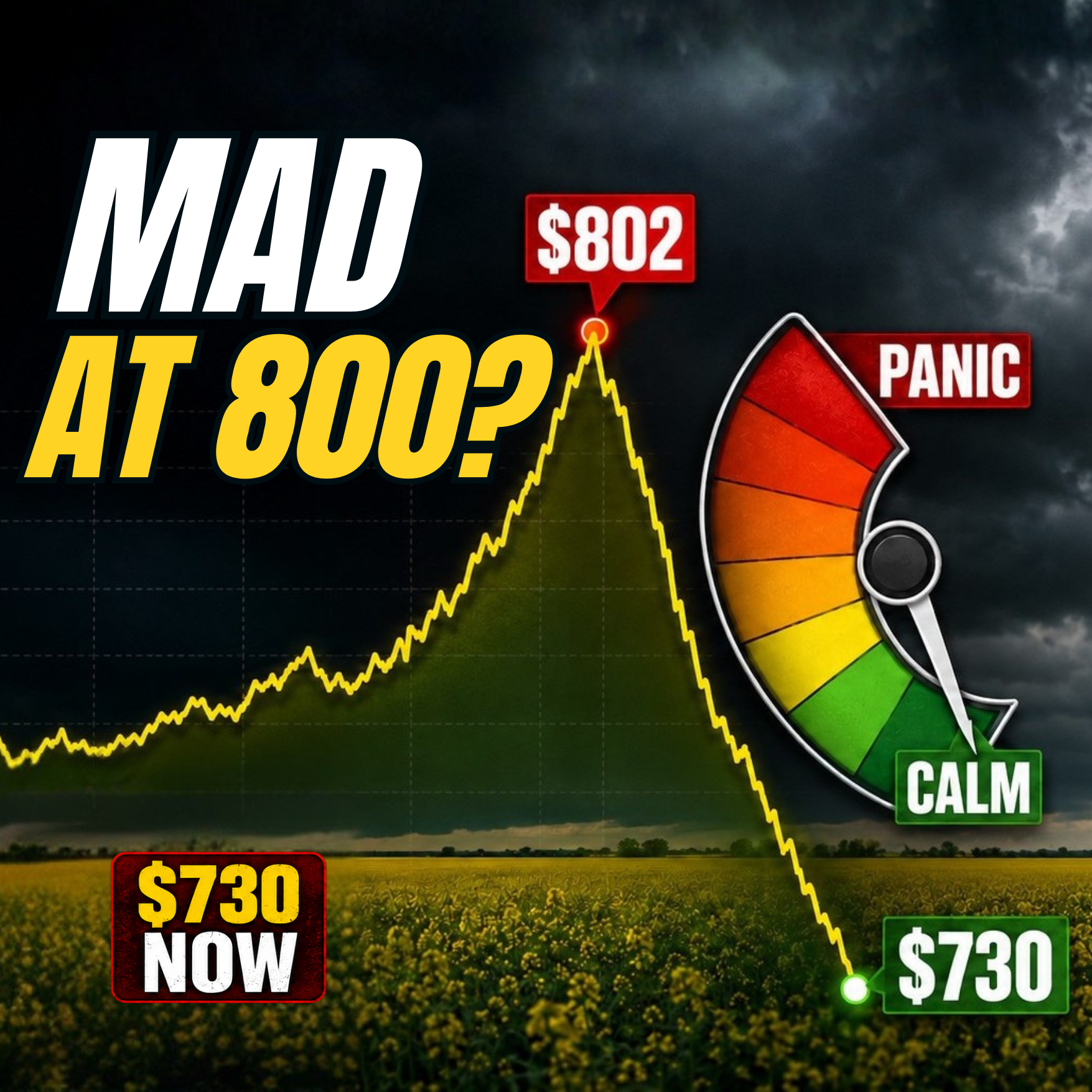
All right, folks, welcome into episode 124, recorded each and every week in the UPL studio. It's great to have you along with us here for today's crop marketing journey. UPL's got great products like Battalion if you want to clean up the field. We use Battalion on our farm here in 2025, and we'll be using it once again here in 2026. We're even at Everest 3.0. Couple of great products there. And of course, we've been talking about WAVE on the show. Bio Stimulant from the great folks over at upl. And when you think about wave, I think about nitrogen use efficiency. That's been a big topic here in 2026. So reach out to your local UPL rep or your local retail and they'll give you a little bit of guidance on WAVE and how that product can help your farm here in 2026. All right, folks, heck of a week here from a crop marketing perspective. As of recording, knock on wood, Canola has closed at a new high. The November contract has traded here before, but never closed here in 2026.
Actually, it's way before that. The last time I would've closed this high. But anyways, for today, we'll say for 2026 and away we go here. You know, maybe it's a little bit of the tension out there that's starting to develop from the dryness and the heat. You know, my kids are under the sprinkler right now in the yard. You know, not something we did on our farm traditionally at the end of May, but the times they certainly have had have changed. So, yeah, so we got a interesting week here in, in crop marketing. We're going to dive into that here. We've got Chuck Penner that's going to join the show. We had questions coming in from growers about specialty crops. I've kind of been a little quiet on specialty crops the last while. So we dust off the crop marketing book for Lentils, Durham, peas, and even canola here to some degree as well. All right, now, if you want to stay up to date, you can do so by subscribing to the YouTube channel or wherever you get your podcast. You can also join the email list Ryan, Denis, Ca. You go to that website, it's right on the front page. You just click that button and you can join the emails that come out. Fridays usually have some crop marketing advice in there, some type of creative meme and. And away we go. All right.
Also, I got roasted last week.
The song of the week was the Macarena. I think it was Tom that said, I, I have no idea how you go from the Bro him, which was the song the week before to Macarena like that is. That was from Pennywise, the Bro him all the way to the Macarena. Like that is such a switch week to week. But honestly, the Macarena was kind of.
It was there, man. It was, it was there for me last week. Not so much this week, but last week. Certainly, certainly enjoying that one for this week. Of course, this is the YouTube music playlist that I've created. I'm going to go with one of my little guy Finn's really been jamming to John Deere Green by Joe Diffie. Just amazed. He is just amazed that there's a tractor out there with John Deere in it.
And I told him, son, don't you worry, I know you're three years old. We're going to discover a lot more tractor songs yet. So just eye opening, getting some of that country music going in the John Deere Green song by Joe Diffie, that'll be my song of the week. So, Tom, hopefully I have recovered a little bit and that one is good with you. All right, man. I certainly appreciate the, the, the comments on, on X here. Other than that, for positive moments for this week or if I want to throw a positive moment out there. It's not perfect on the farm right now. Like, you know, we're halfway in our, in our planting season when we would be wrapped up, wrapping up. Like we still have 50% to go. But the steadiness, the calmness even when things aren't, aren't necessarily calm when you're getting stuck or facing some interesting challenges. I following along, seeing what people are experiencing.
And even yesterday my brother sent me a video of the tractor, the four wheel drive and the drill crossing a creek. Got the tools wet in the toolbox, right? Basically making that crossing. And I'm like, what gave you the confidence to cross? Like you did. What gave you the confidence? And he's like, well, 50 years ago the watershed authority threw a bunch of rocks in the bottom there. And I'm like, all right, well good on you because I.
That was a full sand and
[00:05:34] Speaker B: yeah,
[00:05:35] Speaker A: I thought the nice thing is the wheels got a nice wash. Nice wash, you're halfway done seating, you want to give the unit a nice little rinse. There we go. But the crew, you know, staying safe, steady, calm with these longer hours with the stress, doing a great job. And I think I said a little bit of this last week, but I'm just going to, I'm going to run roll with it one more time for positive moments because it's not easy. We have our deadline in sight. You know, we have an idea on when we're going to get done. Fingers crossed that we don't run into much for hiccups here. And then we hit that, that date. All right.
And I hope wherever you're planting or farming this year, you know it. Like Chuck Penner mentions later in the show, it's like black and white, yin and yang. Like areas with excessive moisture, areas with extreme dryness.
And somewhere in the middle, other fun thing, we have like a wildfire burning in our neighborhood too. Like it's super wet, crazy wet, but you know, the trees are on fire. So go figure that one out. And then my last thing here is that I'm curious and if you want to send in your comments,
[email protected] what you found in the field. What going to flash a graphic here hopefully, or the video, but my dad was out checking.
This is hopefully a short story for you, but my dad was checking the next field.
[00:06:59] Speaker C: Right.
[00:06:59] Speaker A: You're going to check where to go next with the units. And he stops and he's checking and he looks down beside him and there's a fish. There's a fish sitting there just in the stubble.
And we thought it was a rainbow trout, but it is not. It is something else. A red stripe something. Anyways, there's a little creek beside, you know, beside the field, beside the entrance and.
And you got this fish there. And then our sprayer guy, he's going to spray and he's filling and he's like, takes a video. The creek's there and there's three fish sitting in the stubble. So I think they figured it out to around seven miles of creek that these fish are swimming up. But this is not normal. I've got the graphic. Hopefully it shows up here. But you can see the distance of where these fish were found to the proximity of the, of the river.
[00:07:47] Speaker C: Yeah.
[00:07:48] Speaker A: Is it five miles, six miles, seven miles? I'm not exactly sure, but a long ways from home. These fish are a long ways from home and quite the journey all right. Quite the journey they made now. The journey from the old South Saskatchewan river to our, the edge of our field.
Quite, quite the thing. So I'm curious, what did you, what have you found that was odd in the field in the spring of 2026? I don't want the, I don't want
[00:08:14] Speaker C: the history books here.
[00:08:15] Speaker A: I just want what you found that was interesting here in 2026. For us, it's going to be these, these wonderful fish that have made their way. All right, folks, before we get to, before we get to Chuck Penner, I do want to give a just a shout out to Quentin with JGL Capital. Join me on cup of Coffee this week.
If you didn't catch that episode, it is on the YouTube channel or wherever you get your podcast. Check that out. We just kind of talked about the latest and greatest there and, and why even a poor, I don't want to say a poor hedging strategy, but a decision made six months ago on a put option, why that would. Could still feel like a win for your farm here in, in May of, of this year. It's, it's kind of strange, but we talked through why that could be a good thing. And the strategy might be going sideways on you, but what are the positives out of that? So, yeah, check that out. All right, now we've got Chuck coming up here right away. I know that most farms I talk to, you know, aren't running one color or, you know, the same year of equipment, you know, across the farm. It's usually a mix of units, tractor, sprayer, combine. It's all stuff that works great and is doing the job. It's also interesting that farms are layering in tools like John Deere operations center across these mixed fleets, JDLink, you know, using those across these mixed fleets. And then of course, my favorite is just looping in and tying it back together with harvest profits so that you know what you've got going on from a financial situation. Your percent sold, your contract list, your margins, break evens, all that information's in there. So you can do that. You can take older equipment, different color equipment, add John to your operations center, add in JDLink modems, universal displays like the 4640. Start pulling your field data into one place.
And even though the iron might be a couple years old, the decision making doesn't have to be. So check it out. Deere ca or talk to your local John Deere dealership. All right, folks, let's get into it now with Chuck Penner from left field Commodities.
[00:10:38] Speaker C: All right, folks, Chuck Penner with Left Field Commodity Research joins me here once again on the what the Futures podcast. We had a pile of questions come in for a cup of coffee the other day, and I did give Quinton the first chance at answering the Durham questions and the green Pea questions, and he politely declined and said, yeah, maybe, maybe get Chuck on to cover those. So he said, give me a canola one or something.
[00:11:04] Speaker A: So, Chuck, how's it going today, people?
[00:11:07] Speaker B: People, I'm doing good. People don't like to give not friendly news. If you, if I got a bullish answer, I'm much more likely to talk. But yeah, so before we get to
[00:11:16] Speaker C: the questions, I wanna. You had a post on X yesterday just in regards to the weather across the prairies. And we.
Where you farm, we've got excessive moisture. And then yesterday, wildfire, wildfires all around us as well.
[00:11:33] Speaker A: So I don't know how that works,
[00:11:35] Speaker C: but apparently that can exist at the same time. And then you go into, know, portions of southern Saskatchewan, you know, portions of Alberta, central Alberta, moving west, very, very dry.
[00:11:45] Speaker A: Like, what did you, what did you
[00:11:48] Speaker C: get out of that post? What, what kind of realities set in? And, and, yeah, what's on your mind in regards to weather?
[00:11:56] Speaker B: Yeah, it's the, the temperature forecast this week that kind of twigged it for me is kind of, you know, because I know, you know, there's the old joke about the difference between a flood and a drought is about a half an inch.
[00:12:07] Speaker C: Yeah.
[00:12:08] Speaker B: And. But how quickly things can turn, especially when you've got that extreme heat and how quickly that moisture can get sucked out of the soil. I mean, I'm old enough to remember my 1. I think I've maybe said this before, but my very first year of farming was 1988, which made 21 look like child's play.
And especially since we didn't have zero till then or anything like that and. Or not much of it.
And so, you know, that year I remember being hot and dry in May already and in early May.
And so somebody, I was talking to somebody yesterday too, and they said they were asking, you know, like, how does this compare, you know, conditions now in may compare with 21. And so there's a handy dandy little thing you can look up on Environment Canada. Yeah, Environment Canada.
There's something called a drought monitor or drought watch.
And so you can compare. You can pick two months. You can put two months side by side. And so 21 was very.
What? This isn't 21.
You know, fingers crossed at Least not
[00:13:13] Speaker C: yet as of May 27th. Yeah.
[00:13:16] Speaker A: Right.
[00:13:16] Speaker B: I mean, that year already in April, it was extremely, extremely dry.
There was no soil, no subsoil, no. Whatever this year is, is quite different in that way, even though it is drying out with this heat now and all of those sorts of things. But it's not as dire or it's not as irreversible or serious yet as it was in 21. Just because of that, we've got more subsoil moisture and so on. But that's what made me start to think about it. And then when I did post that, I started to get some responses back. Say central Alberta. Yeah, we're, we're really worried and within a few days it's going to get really serious.
And so, yeah, it's just we make these kind of estimates or these yield guesses and all of these kind of things.
And I've been around long enough to know you put these things out there and we use average yields at this time of year because those are your best odds and around the average when people make these forecasts and whatever and make them convincing, try to make them convincingly or, or, you know, with some certainty.
No. Yeah, we're just getting the crop planted and you know, for, for the guys up North Saskatchewan and northeast, they're just getting going. I think yesterday they were talking about this guy was in, oh, I can't remember where, but he was talking about 15, 20% done now.
[00:14:42] Speaker C: Yeah.
[00:14:43] Speaker B: Whereas a lot of other places they're done, done. And so it's, it's a huge mixed bag. And the other thing is too, is that, is that the media picks up on stories, you know, about the seating, delays and all of those kind of things and wetness and then they forget that western Canada is a pretty big place and conditions can vary a lot. And it's a good lesson too, even for when we look at other countries, what's happening in Brazil. And so we lumped the whole thing together where there's huge differences in conditions anyway, it's just one country. I could go on and on.
[00:15:14] Speaker C: Yeah, yeah, yeah, fair enough. Yeah, we, we've just reached over 40% planted on, on our farm and we have a, a goal of like, you know, weather holds. June 3rd, we, we could be done.
And yeah, like, I know there's an ideal seeding window, like it's there for a reason, but yet the rest of the summer has to play out, the fall has to play out to figure out exactly what, what's going to happen
[00:15:38] Speaker A: from a yield Perspective.
[00:15:40] Speaker C: I said on cup of coffee earlier this week, I saw a beautifully planted crop a couple of years ago. Nice and early got in. And then the last two weeks of June or that last week of June into July, it got crazy hot. And it was just completely damaging to a canola crop that was flowering outside of the normal heat window. Supposed to be a good thing, right? And yeah. Didn't happen that way.
It did. The other thing that happened on our farm this week is we found fish in our.
In our stubble, in our. My dad was going to see, like, which field to move to next because it's kind of like building a puzzle out there right now. And he looks down and there's this fish just lying there. And he's like, okay. And then our sprayer guy, he goes and he takes a video and there's multiple fish just lying there. And we're about, I think they said, seven miles from the river and the creek. You look at this little creek and you look and say that thing. That's where this. The fish swam up from. But yeah, apparently.
[00:16:41] Speaker B: Well, the good news is that's good fertilizer, isn't it?
[00:16:44] Speaker A: It's.
[00:16:44] Speaker C: Yeah, 100%. 100%, yeah. So we're pretty excited to see how that plays out on some of those quarters there along that creek.
[00:16:52] Speaker B: So you got to watch the combine monitor when you go over that spot. That spot and see.
[00:16:57] Speaker C: Yeah, yeah. Build our program moving forward. So I got a question that came in from Colin and he says, hey, Ryan, how about a green pea update? I know the market is qu, but is there any possibility of demand this fall or later in the winter? Last thing I saw in green peas, especially for old crop, was just a little slide, a little decline in price, but quieter on new crop.
[00:17:22] Speaker A: What.
[00:17:22] Speaker C: What are you seeing in regards to. Let's talk about green peas, but let's throw yellow peas in the mix after that too.
[00:17:28] Speaker A: Sure. Yeah.
[00:17:29] Speaker B: I mean, you know, this year was we went through the fall without China in the market. Right. And they're a big green pea buyer.
So this last fall was contracts getting pushed and delivery getting pushed and all of that kind of stuff. So there's a core of demand, non China demand that goes on and that provides some of a part of a bump in fall movement, but it's not massive. I think this year we will see a rebound once we get into the mid September kind of timeframe that is kind of the seasonal when we start to see the prices for peas, yellow and green, start to turn higher is around mid September. And that's when this shipping program to China. So we will see a recovery that the difficulty is we're going to be carrying over a fair amount of old crop greens.
And the question is always, okay, well what's the, the fall or the summer low or whatever, where's that going to be?
So if we're looking at, I don't know, 9, 50 or $10 right now for old crop greens and things like that, how far is that seasonally going to drop before it starts to recover?
So if you got old crop greens, is it worth holding onto them, selling them now at 950 or 10? Are we going to get post harvest? Are we going to get back up to that level? And I think we'll probably, yeah, we could see again depending on how the summer turns out, of course, but I think we could get back to those kind of levels. I don't know that we're gonna see extra buying this fall.
Well, shouldn't say that more than better than last year because China is in the market now.
[00:19:12] Speaker C: Sure.
[00:19:13] Speaker B: But compared to a typical fall, probably not a whole lot more.
And so, yeah, we might get back to these kind of levels again. If farmers really switch out of greens into yellows, let's say, or things like that, then we probably could get back up above 10 or things like that might take a little bit later into the fall, like maybe October, November kind of time frame before we get back to those kind of levels. Because the mid September is just the start of the move higher. So you know, you want to let that, want to let that run a little bit and we'll see. So India, like we talk about India a lot. That's really a thing for the yellow pea market. Yeah, they don't, well, they don't buy any greens actually. So India, Indian monsoons or lack of monsoons or those kind of things aren't going to affect the green pea side of the market.
Just yellow. That is a real possibility for the yellow pea market.
Because if you think about the last, last year we had India in the market for yellow peas, but we didn't have China. Yeah, the, the two years before that, two or maybe more years before that we had China in the market, but not India.
This fall we're going to have both in the market.
[00:20:30] Speaker C: I was going to say, yeah, both are.
[00:20:32] Speaker B: Yeah, we're going to have both of those buyers in the market. And that again, that's thinking specifically of yellow peas. We could see a really nice price response this fall. And partly it'll be driven by what Happens with Indian monsoons and that sort of thing. And there are all of these concerns already about, you know, the rainfall being lower than usual and so on. So El Nino and all of that jazz.
[00:20:58] Speaker C: Super El Nino.
[00:21:00] Speaker B: Sorry. Super El Nino. Yes.
And I'm typically a bit of a weather skeptic, but this one could be
[00:21:08] Speaker C: a little more 150 year event like last time.
Okay, don't, don't fact check me on any of that, folks. Apparently 150 year event. So we'll, you know, we'll, we'll keep our eye on that. Chuck, going back to Greenpeace for a second. If you had, you know, a $10 opportunity to sell these things at 10 bucks and new crops sitting down at what do we call, what, nine or lower?
[00:21:34] Speaker B: Yeah, probably around nine. Yep.
[00:21:36] Speaker C: Like, you know, and, and if you had to generate cash, let's say in September, like you know, normal farms. Right.
[00:21:45] Speaker A: Would you hold those and go through
[00:21:48] Speaker C: that decline or would you kind of favor the 10 because you, you might squeak out a 1025 or 1050 like you might. But would you sell the 10 or would you hold and, and say, all right, well, you know, let's hold these into the winter months and get a
[00:22:04] Speaker A: recovery and go from there because that
[00:22:06] Speaker C: could be six months of interest there.
[00:22:07] Speaker B: Oh, sure. One of the questions I would ask is, are you growing greens again this year?
You know, so if you're not, if you've got, if you're just going to have greens and you. I would unload a portion of a decent portion, maybe less than 50%. You know, I'd unload a decent portion of them. If I'm going to be growing greens again this year, then I'd be more motivated to not add to the stockpile and put even more, add even more exposure to the new crop market and that sort of thing. So that would be. But in any case, yeah, I think I would take some of that. If I can get 10 right now, take it on 30, 40% maybe of what I got left.
[00:22:48] Speaker C: Yeah, I'm just looking at my mid April, I ended up selling the last 20% here at 10 bucks is what I, I recorded. So I did move to 100% sold a month or so ago.
[00:23:01] Speaker B: Yeah, if you are going to sell old crop yet, like don't wait though, like it is sooner the better, lower seasonally. So, so do it now or, or just like make the decision now whether you're going to pull the pin or wait until the, don't kind of dither until, until you get into June and middle of June when prices are $0.50 lower.
[00:23:22] Speaker C: Yet I would think, you know, green or P acreage in western Canada, it was definitely going to decline until fertilizer prices got, you know, crazy. I'm sure there's still a decline in there, but for acreage. But are you getting any sense on green peas? Like, what do you think there's a mass exit of from the green pea? Acre or. Hard to tell at this time.
[00:23:46] Speaker B: Statscan said acreage would be down 12%, but that was based on their December January survey. So that was before China dropped their tariffs. Even so, farmers are thinking smaller export market and so on and so on. And yellow P bids have improved since then as well.
So we're at about a 5% lower. Like total yield, total P acres with greens, yellows unchanged from last year. And greens maybe down about 20%. Greens and maples, let's say both down around 20% or a bit more. So I don't know if that's massive or not, but.
But we will. We will be carrying over more crop. Will be carrying over more to.
[00:24:31] Speaker C: You mentioned maples there. Maples and green peas, they have the same story. It seems like almost the exact same story. Like China's the big buyer, right. There's going to be less acres this year. There's going to be a bunch of supply carried over.
Is there any difference between those two markets or are they very similar?
[00:24:48] Speaker B: I would say they're very similar. I mean, maples are even more heavily reliant on China. Like greens, you get other demand from other countries.
Maples are even more concentrated on China. So. Yeah.
[00:24:59] Speaker A: All right, fair enough.
[00:25:01] Speaker C: Okay, let's change gears now. We did get a question that came in from Brody. He farms in southeast Saskatchewan. I think both those guys are actually southeast Saskatchewan, if I remember correctly, for Colin, but he's in Durham country.
I was wondering if you could do a little bit of a deeper dive into the Durham market and where you think it could be headed. Big fan of the show. Keep up the great work. Thank you, Brody, for the positive comments. Chuck, what are you seeing in Durham?
[00:25:29] Speaker B: That's another one where we're going to see fewer acres. And it's really a guessing game right now. I don't even remember what stats can.
They showed only a small decline. If I remember right, we have a larger decline with a alternate scenario of an even bigger decline in Durham acres. So we're hearing from guys in core Durham country saying, yeah, I'm switching the red spring wheat this year.
[00:25:54] Speaker C: Yeah.
[00:25:55] Speaker B: And so, like, how Big is that move? It's really hard to say, you know, so we could lose a million acres out of Durham, I think, without, you know, and which wouldn't be a surprise compared to last year. That's a real positive part of the Durham outlook. But what you're also going to have is you're going to have lower demand.
So you're going to, you know, you know, we'll drop production, we'll drop supplies, and we're going to have lower demand.
[00:26:23] Speaker C: We are going to have lower demand for Durham, you're expecting.
[00:26:26] Speaker B: Yeah, North Africa.
So the North African crop, the last ice. Well, our last numbers that we came up with and have seen from some other sources too, from International Grains Council, I'm trying to remember now, the total crop there is between Morocco, Tunisia, Algeria. Those three are the main importers.
Their crop is going to be up 40% from last year.
[00:26:52] Speaker C: Oh, wow.
[00:26:53] Speaker A: Okay.
[00:26:53] Speaker B: Yeah, their import needs are going to be lower. And so we typically, especially Morocco is one of our key buyers. So that demand is going to be lower. So you're going to have this smaller Canadian supplies offset by smaller demand.
And so, you know, how is that, how is that going to play out? The US Crop will be smaller as well, too. So we might be shipping a little bit more to the U.S. the European crop, while right now they're in a bit of a heat wave, and the French crop, for example, is mostly headed, you know, is that heat going to cause serious problems at this stage? Hard to say. Maybe with some filling. You know, I don't know. I think they've had pretty good moisture until now. But yeah, there's this heat wave now at this point. And Mexico is going to have probably a larger crop. They've had a disastrous one last year. So all of those kind of. There's like a whole bunch of moving parts in the Durham thing. And then trying to figure out what's the net impact of this friendly, this bullish signal and this bearish signal of lower demand. You know, I'm still, still looking at the seasonals and we're going to have a bottom this summer. I mean, prices are going nowhere right now. So we'll have a seasonal bottom and there will be a recovery. It's just how big that recovery will be. And the other thing to remember on Durham is that the seasonal highs are November, so you don't get a bump in spring or those kind of things. So that's why there's, there's no. We're exporting Durham right now. Last year was a Record, and we're very close to that right now. Bids are going nowhere, which tells me there's probably more Durham out there than what it looks like on paper. But the fact that you can move record amounts of Durham and have no impact on prices tells you there's still supplies out there.
But I still think we'll see a recovery. It may not be. Again, I'm recalibrating everything in my head right now because of these 35 degree temperatures.
Like, I'm trying to recalibrate on the go and kind of what, you know, what impact is that gonna have?
But no, we'll see improved prices in fall into October and into November.
So it's not like I would say, like there's no real downside in the market right now in the short term. And so we'll probably be moving. Like there won't be a real seasonal noticeable bottom, but there will be a recovery. So it's just a matter of being patient now into October, November, and frankly, guys in the south of Saskatchewan and they're seeing these temperatures probably aren't, you know, selling crops probably not top of mind right now. In fact, it's pushed way to the background.
[00:29:39] Speaker C: Well, and so as we're recording this in kindergarten Saskatchewan, there is a. For a 2 quad, $8 special for June delivery, the and then new crop bid.
The price there doesn't seem. I don't know if it's even a real one. It's 689A bushel. I'm assuming that's just a placeholder.
[00:29:59] Speaker B: That's a bid. Yeah.
[00:30:01] Speaker A: Right.
[00:30:01] Speaker C: So, but eight bucks, I'm looking at my recommendations from this past year and I've got $8 sales. $8 sales. There's a eight and a quarter in there and just more $8 sales. So it's been a market that's in one sense kind of forgiving because you can leave it, go away from it for a bit and come back and still sell for the same price and
[00:30:23] Speaker B: just pay the storage costs or the carry charges.
[00:30:25] Speaker C: Yeah, yeah, but no big winners there for me anyway, so.
[00:30:29] Speaker B: But, but no, there might be, there might be 50 cents this fall or if we really run into crop problems here, you know, more than that. Right. So, yeah, compared to the last movement to last year, that's a huge increase. Yeah, yeah.
[00:30:42] Speaker C: And that's the interesting thing is the quality breakdown and what we can see happen to the premium and discount schedule. It can be quite wild. And if you're sitting on good quality and it's eight bucks, isn't doing it, cash flow's okay, and you think you're going to get eight or better the next couple months, then you have that quality play where maybe it does help you out this fall.
[00:31:03] Speaker B: Yeah. And that whole quality discussion is far more prevalent this year than the last two years it's been because we've had some pretty serious quality issues. Two years in a row. Yeah.
[00:31:15] Speaker C: Yeah. All right.
This one came in from the lunchbox crew, but just a little bit of a rundown on. On the lentil market. And I did make one new crop sale. I feel a little bit slow on my specialty crop sales, but I've got one one sale at 25 cents a pound for reds. You know, you talked about weather. Super El Nino or you said El Nino. I put super in there. Australia, you know, is interesting right now.
India, potentially. Does that make us a bit more bullish in the lentil market or. Not quite yet.
[00:31:49] Speaker B: The El Nino or super El Nino is supposed to start showing up in June.
And so right now the weather in Australia has actually been pretty favorable for their lentil whatever their a bears will come out with their first estimate probably next week of their next year's crop.
Lots of grains of salt and things like that, but some pretty favorable conditions to start. But there is some, you know, there's always that possibility of some. Some problems developing in that Australian crop.
Can't really bet on it. You know, I think the situation is just as uncertain in Western Canada.
Again with this heat and things like that, the lentil acres will get in the ground. We also don't know how much of a shift we're going to see out of greens and into reds this year. I think it's going to be pretty significant. So we'll see more red lentil acres this year, but. But last year we had a massive yield. So this year if we just draw back to average yields, and those are always open to debate, but if we drop back to average yields, our lentil crop isn't going to be bigger this year than it was last year.
But for me, the big, big possibility is an issue in India, and I think that's a real possibility.
And we could start to see, even though that their. Their lentil crop doesn't get planted until November, we could start to see a little bit of movement earlier than. Than that if. If buyers there are. Are already getting concerned about the moisture and all of that kind of stuff. Like the problem. I'm not sure if I've explained it before, but. And you. You already know this, Ryan, but The karif season, the summer season that they're just getting into now, that's when all of these monsoon rains fall and those last until September typically. But that provides the soil moisture for the next rabi crop, which is when they plant lentils. So if they don't get the rains, you know, June, July, August, September, especially September, that already makes their next lentil crop interesting or, or problematic or whatever. So we could start to see some, some movement there. And then if you do have a problem with either Australia or Canada, you know, or both, would really make that market explosive. Yeah, it's, it's certainly something that has a lot of, there's a lot of ifs that have to fall into place, but there's some pretty good odds of some of those ifs happening and at least one of them, you know, or two of them.
So those are the, those would be the, the friendly signals for the red lentil market. So I think, you know, someone was asking me the other day about how, how far, how much to get sold new crop reds.
And I was, you know, you know, I was talking like 20%, you know, maybe 30 at the most. Yeah, that would be my, my thought at this point. And
[00:34:53] Speaker A: yeah, yeah, I'm at 10, 10%
[00:34:56] Speaker C: feeling a little bit light. But I'm also wondering, you know, what the downside is in some of these markets. Right. And there was a specialty crop buyer on, on X yesterday that said, I have a question for farmers. Like, why aren't you selling? Like, I'm confused and I've. The answers coming back were great. Like, you know, like just common sense stuff. But the one guy's like, I can't afford to pre sell at the prices that you're offering. I just can't really say I want to stick my neck out here and lock in a negative return at this time of the year. But yeah, like, why aren't farmers selling and how much downside, you know, could we anticipate here?
[00:35:39] Speaker B: Yeah, and on the red lentils, I don't know if there's like, you know, unless the weather is, you know, fabulous in Canada and Australia and you get a great yields again this year. I don't know. I mean, you know, we've, we had a pretty good, I mean, we didn't have a, we had good yields last year in Canada and acreage was so, so we had a record crop in Australia and even. So prices still moved higher. You know, especially in the last couple of months, they've still been able to move higher. So if there are, if We're. If any of those get scaled back or Indian demand picks up. Yeah, it's looking quite friendly. I mean, I would say that farmers, especially the ones like, if you're growing things like chickpeas or, you know, you're at the bottoms in the market, but if you're also in southern Saskatchewan, where you've had three, four years of really challenging production, I can understand why you'd be. Why you'd be hesitant. And then you look at the forecast and you see these temperatures and you go, not going to do that.
I mean, there are tools out there that now will help ensure against, you know, contract issue or, you know, unable to fill contracts and that kind of thing. There are products out there, but even then, I think for the mo. For the most part, farmers are just kind of going, especially those guys down South.
Nope, not gonna do it. Yep, I get it.
[00:37:04] Speaker C: Yep.
[00:37:04] Speaker A: Yep.
[00:37:04] Speaker C: Until we're. Until you're comfortable, and that could take some time, so I get it. Yep. All right, Chuck, one last quick one for you here. Canola, currently trading. As of recording, we're 764 and change on the November contract. We've traded this level around eight times over the past month or so. Couple months now. I guess I'll put the March high in there as well. Does this put up any alarm bells for you to say, hey, you know, this is a pretty important level? Or I guess is weather a big concern here that could be causing a bit more of an influence?
[00:37:39] Speaker B: I mean, there's questions about, you know, are all of the Canola acres going to get planted? And. And I think, you know, you might lose a few here and there, but I don't think it's going to be serious. And then, of course, you know, whatever weather like, I tend not to get too hung up on specific support or resistance levels on charts or things like that. But what I do watch the. I do watch the charts. It'd be kind of silly not to. But what you see is. And it's not just in Canola, but it's in a number of crops, is that you've had this rally earlier, and now it's kind of flattened out, leveled off, even with the wild movement that we had on Monday and Tuesday. And, well, today seems a calmer kind of a day. But, you know, even with that wild movement, it's still kind of, you know, trending higher, and then it just kind of goes sideways. So the overall change in momentum is a bit of a warning signal to me.
And of course, the seasonal. The seasonal things even in 2021, when we had dry, extremely dry conditions much earlier in the year, prices were still starting to tip over. And then, you know, you got into late June and you kind of go, okay, that's it, the crop is done.
Then it started to move higher this year. If there's any sign of a decent sized crop, we'll see those seasonal declines. But I want to make clear, though, even when we talk about the seasonals turning lower, that doesn't mean we're bearish.
That just means there's going to be a dip before it gets better again once you get past harvest. So you can be bearish short term.
[00:39:16] Speaker A: Yep.
[00:39:16] Speaker B: Even though bullish longer term. Because our S and D, like my partner John, works the Canola S and D. And it's looking tight into next year. Lots more, you know, more crush, increased crush. We might have to ration export demand and all of those kind of things, but just because short term, bearish, it's, it's more like if you have to make a sale, don't wait until July into June and July.
But if, you know, otherwise, yeah, we're, we're pretty friendly toward the Canola market longer term.
[00:39:48] Speaker A: Awesome, Chuck.
[00:39:48] Speaker C: Well, that's great. And like you said, markets go up and down, right? They, yes, they're going sideways right now, but they go up and down. I know for me, when, when the drop happens, I just, I like to get to a comfort level where I know I've got my, you know, my fall movement, I've got some prices locked in, maybe some hedges in place, but when the drop happens, I sit there and feel good about my position, whatever that is for your farm.
[00:40:12] Speaker A: Right.
[00:40:12] Speaker C: And just feel good about it that you bought yourself time for the next rally or the next spike. Because what you want to do is you want to sell higher than your last sale. Right.
[00:40:21] Speaker A: And keep building that average up.
[00:40:23] Speaker C: So.
[00:40:23] Speaker B: And that's why. Sorry, that's why it's so important. You know what? You know, I'm not a futures and options expert or by any means, but for canola and for wheat, you do really do have some opportunities for, you know, to get prices sold, you know, with a, you know, with the futures contract with just using futures, maybe not the option so much because the volume is thinner, but, you know, you get into those kind of opportunities because the basis is just so awful right now, but you have the opportunity to get a, to cash in on the stronger futures. So. Yeah.
[00:40:58] Speaker C: Awesome, Chuck. Well, good stuff. Appreciate all your time on a very, very busy day. And any Summer holiday plans yet or not quite. We're.
[00:41:08] Speaker B: We're doing a road trip. Our daughter's getting married last weekend in June. And then the next week we're gonna. We're gonna head west. We're gonna one night in Moose Jaw and then a couple nights in Cypress Hills, a couple nights in Waterton. Nice drive through Lake Louise because it's crazy expensive in July and then up around Edmonton and then back down Saskatoon and around. So that's our plan. Perfect.
[00:41:32] Speaker C: Well, I'm expecting a full yield production update after that drive.
[00:41:36] Speaker B: I can write off the trip, can't I?
[00:41:37] Speaker C: And yeah, you can write off trip. And if you need some hot spots
[00:41:41] Speaker A: in Moose Jaw, let me know.
[00:41:43] Speaker C: There's a couple.
[00:41:43] Speaker A: Oh, I like.
[00:41:44] Speaker B: I like Moose. I've been there a few times.
[00:41:46] Speaker C: Yeah. Yeah.
[00:41:46] Speaker A: All right, man.
[00:41:47] Speaker C: Thanks for your time. Okay, take care.
[00:41:53] Speaker A: Well, I feel like that got us caught up here on some of the specialty crops. So big thanks to the folks that sent in questions there and kind of nudged me in the right direction here on. On specialty crop props. So I've been a little quiet on it on the marketing side on those ones. Not to say that I'm runaway bullish on some of these, but yet trying to practice patience. Getting a little bit done in most areas, but just not trying to get too far ahead of myself here right now. All right, strategy talk for this week. We've got, well, the Canola market as of recording trading a new high, closing at a new high on the November contract. Again, by the time you listen to this, what has happened but up. 740 a ton. 760. 7, 70.
Just off the high of the day.
Nice little run here in the Canola market. And entering like. I don't want to call it like the dream team scenario, but, you know. Did you have $17 canola on your bingo card this year? Like, I saw there was a $35 basis at Crush Regina. So let's. 1735 a bushel. What's that on. On your bingo card?
[00:43:07] Speaker C: Right.
[00:43:08] Speaker A: So where.
Looks like we're entering maybe.
Maybe here with a little bit of luck. Just a run somewhere between here and 800. We'll see if this actually happens or transpires or what this looks like. But, man, would that be exciting.
Maybe it's dryness concerns. Maybe it's demand in the background, you know? You know, maybe it's both kind of doing this for myself. I'm not a. I'm not.
I think weather is a concern.
I think weather is top of Mind as it usually is. I guess maybe it is providing a bit of a spark here. But what often happens is, you know, you get a little bit of tension, you get a little bit of uncertainty. Your market rallies, finds a reason to peak and then does its unwind, right, does its pullback. And you know, I talk to a lot of people every week and someone asked me like, what's on farmer's minds right now? And I said, well, at the end of the day everyone's really, really busy, so not a lot of people are, are wanting to chat. Concern about how this unwind, you know, is developing. I, I, I follow some technical traders. I, you know, follow some great people with, with some great insights. And you know, if the weather story fades here or runs out of steam, there is some interesting chart developments, you know, that could look like this market's pulling back. Well, we'll see. Weather is a, is a time of year where weird things can happen, silly things can happen. You can get these big run runs higher, especially if it stays dry for a few weeks and you get some great pricing opportunities. But the unwind is what people are worried about. What happens if the weather smartens up, gets better? What happens if, if the funds decide to unwind their position? Do the seasonal peaks that history has showed us, do they matter? Lots of different things here going on. So I just, this will be an eating your veggies, but stay super sharp in your Canola marketing. I like for myself. I chatted with a farm today and I said, I don't know, I don't understand a world where if canola traded to like 790, 795, I don't understand a world that I wouldn't be, you know, 100% hedged on that canola crop. If I get that opportunity, I ain't missing it. I ain't. I'm not letting that one pass me by because I believe I budgeted what, 15 bucks for canola? 1450 maybe, something like that.
Yeah, I'm not letting, letting $17 canola pass us by for 2026.
So hello, canola crop marketing. Let's keep it top of mind. Also, old crop spring wheat specials out there for June. Guys, you got a little bit of sway right now, a little bit of influence, a little bit of flex. Like if you want to squeeze these buyers a bit, there's a good chance to do it before the drills get parked and everyone focuses on, on the next task. You can take a little bit of leverage right now. Not many of you want to pick up the phone and make deals. So if you're one of the rare ones that is willing to do that, you have a couple days here to flex and to get a bit better than the posted specials. I wouldn't take a posted bid to save my life right now. I wouldn't take an old crop wheat bid on a website as gospel. I wouldn't do that. I would certainly flex and get something better than what's out there. There's demand there. You're a willing participant to maybe sell something.
You just gotta do a little bit of squeezing there. All right, Feed barley market in Lethbridge. I know I'm gonna get a couple of eye rolls here on this one, but that trend continues to climb.
And we've got summer delivery for feed barley into lethbridge 707A bushel. So you got a back off freight to your backyard. And I've got new crop off combine. August, September. August a little higher than this. September just a little bit lower. But 675.
So I'm seeing some feed barley specials out there for fall.
Feedlot Alley might be driving the bus on that for you at this time. So if you're a feed barley grower, you want to take advantage of some of the highest prices here of the year.
There you go. All right, you've got a starting point. How far are you from Lethbridge? Figure out your freight working backwards and that is the number.
Lastly here for strategy, we've got canola basis improving, which specifically in Saskatchewan. I don't want to say that, you know, that this is the start of something much bigger, but it is the start of something in a world where we have are coming off of some poor, you know, canola export China stuff. We're coming off of some uncertainty with the US like all that's behind us now. We're starting to see basis levels kind of respond slowly.
And so I'm not, you know, I don't know if we go and make, I don't think we go and make like ultimate high in new crop basis, but it's improving a little bit. And you just need to know that. All right. I wouldn't take a posted basis out there at this time, but there's some negotiation that can happen. And it's important for you to know the canola basis for new crop is improving.
Well, we get a bunch of great weather fixes, everyone's problems, more acres planted, so on and so forth and, and see basis get worse maybe. But for right now, hey, maybe they're concerned. Maybe that Merchant's concerned about the weather and the forecast. Maybe they're trying to tie in some bushels. Maybe this is the start of a better canola basis program here moving forward. All right, you let me know when you see it. You let me know and report back. All right, that's about it for strategy for this week. I'll leave it at that. I think that's. That's pretty decent here for. For what we got on the go these days. All right, well, our farm is planting our 7,000, 206. Of course, that's our Brett Young canola seed going in the ground a little bit later than what we'd want. But. But you know what? We'll play the cards that mother nature has handed us. And we are very, very excited for this variety because, of course, across the fence, Mike has been kicking our butt here the last couple of years with his canola crop. So we made the switch here on our farm for 2026 and excited to follow the journey of this Brett Young canola seed and see where. Where it takes us here in 2026, man, you know, if I could pencil in some $17 price, 16 to 17 bucks. Multiply that by Mike's cannoli yields from the last couple years. Yeah, we'll be smiling. We'll all the way to the coffee shop here in 2026. Of course, Brett Young, not just canola seed. They've got great forages as well. They've got a alfalfa grass mix blend that's offering, of course, the high yields that you expect out of Brett Young.
But you can check out pro hay. It's a blend that combines Brett Young's best alfalfa with a hybrid brome grass and timothy, making it a sure win on your farm. Of course, reach out to Brett Young or to your local retail for more information about pro Hay. All right, eating your veggies for this week, guys. Well, I can't. I can't say it enough. You know, we take certain crops. We take, you know, turns on how we spend time and energy on marketing. And I've been heavily focused, I'd say, on wheat the last little while here. Well, now it's time to turn our attention back towards canola. Is it the canola put that you're gonna be warming up to the idea here. If Canola trades to 800, is it, you know, looking at forward protect from a guy, three to buy insurance on that contract? What are you gonna do? But I want you to dream here a little bit about the impact of Canola. If it makes another run up here of 30 bucks a ton, what's that gonna do for your farm operation?
And what scenario do you like? Get ready for it, right? Get ready, get prepared. Draw it out, write it out, be ready to execute. Because when it turns, it turns fast. All right, that's number one. Number two, feed barley. I like, I like rewarding the high of the year in feed barley as well. I, I got a little old crop to clean up here.
I've got a little bit of new crop. I wouldn't mind getting a bit more done.
I think you could put feed barley at the top of the list here as well.
And, and yeah, get, get a little bit excited about marketing your. Some of your feed feed grains and feed barley specifically. I was gonna put oats as number three in our eating your veggies, but let's let the oat millers, let's let them sweat a little bit longer. That price continues to climb steadily. So what I'm gonna say here for eating your veggies, this is an easy one for you, but keep your eyes peeled. The cool conference.
The preliminary agenda should be out within the next week, so keep your eyes peeled. We will have the crop marketing may cool at least that preliminary agenda circulating to those on the email list and maybe a bit on socials here over the next week or so. So stay tuned for that one.
All right, guys, I've been talking about or just wrapping up the show here, but we do have the text updates if you want to join. The what the futures text group. You can get futures updates three times a day. Canola wheat, corn, soybeans, crude, the usual suspects. What happens is you email Ryan at what the futures podcast ca. I'll let you know if we have a spot for you and then I'll send you an example. And once you're like, yeah, I'm good with that, then we can add you to the list. All right, so if you want updates, that's where you, that's where you can get them. Thanks for hanging out, folks. Send in your thoughts, questions, comments to Ryan with the Futures Podcast CA if you found this episode useful, tell a friend, tell a neighbor. That's how we grow this thing. So certainly appreciate you doing that. Strategy can change, prices can change. Fingers crossed. This canola market continues to climb as I hit end to the recording here. Have a great weekend, folks for the what the Futures podcast. My name is Ryan and guess what?
I'm out of here.