Episode Transcript
[00:00:00] Speaker A: All right, folks, welcome to cup of Coffee. My name is Ryan. I'm from the. The what? The Futures podcast. It's Tuesday morning. I've got one cup of coffee 20 minutes on the clock. And we have a tight 20 today, actually. My.
Yeah, we got to cruise along here. We're going to talk about what's really moving the markets. And I've got Alison Thompson from the Money Farm joining us this week. Of course, you can toss your questions in the chat. We did have a couple come in, a couple of sensitive ones came in this week. So we will touch on that in just a moment. This week's cup of coffee sponsored by Brownlee's Ag Tech. You can check out products like the full bin sensor to@Brownlees ca. And I think I saw free shipping for Canada and the U.S. i think we all have a story about filling a grain bin trying to top it up and some of the adventures that can go on when you're topping up the bin. But you can save yourself that grief, head over to Brownlease ca. All right, markets. Well, yesterday was a super exciting day. We are continuing a little bit of that momentum here. To continue on here for Tuesday, we have canola currently up 550 a ton at 762.70. So the canola market showing signs of life even a little independently. I was reading, you know, people mentioning yesterday that Canola was just following soybeans in kind of sympathy. But yet here we go, Canola holding some gains and soybeans down about a penny here this morning. So there you go. Am I getting excited about marketing canola at $7.62? No. But we'll talk about that in just a few moments. Bean Oil basically unchanged as well again that soybean oil 6670.
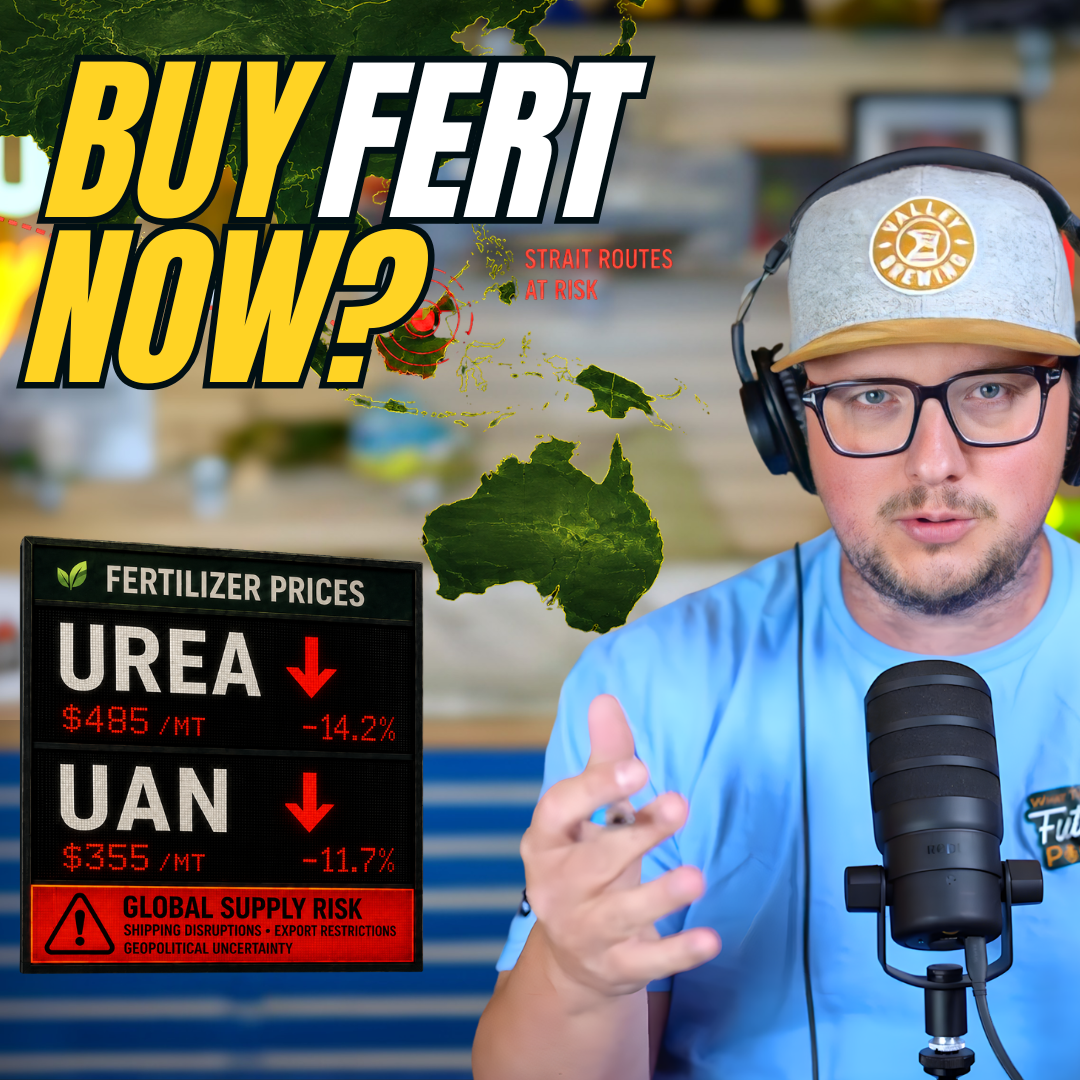
We've got spring wheat up six cents this morning at 6:35. Again, that's coming off the lows here of six bucks from just a couple days ago. Kansas wheat down about a penny here at 648. Corn's down a penny as well at 4:37. We've got what am I missing? Canadian$70.62 and crude oil 69.78. A little bit of a little tiny bit of strength in crude based on some action yesterday in the street of Hormuz from a price perspective. We'll chat inputs for just a second here, but we do have we had Josh Linville on the show a couple of weeks ago and you remember he said these first offers in Western Canada, they seem to be for Summerfield, they seem to be a little bit out of whack, a little bit high. And so, you know, here we are. Continued decline in urea values, not big ones. It's a slow grind, lower, but important to watch and to monitor here. I'm going to say the low 700s for the lowest priced area of the prairies. I was talking to the lunchbox crew and I said it's really weird when the price of urea for Summerfield is the same everywhere. That doesn't make sense. And just a day later we started to see, you know, like the lower price areas, like the freight advantage areas.
It started to leak down in those spots. So we're talking now low seven hundreds for many of you. I have not seen a six yet.
I know many of you are waiting for a six. I have not seen it yet. And it's quiet out there. It's very quiet. All right, diesel prices, you know, farms looking for a bit more of a decline here. Crude oil goes and trades back, you know, all the premiums from the war in Iran. But yet diesel prices, they did decline off the hop now they've been very, very steady here across the prairies. Some sideways action when it comes to diesel. I don't know If a buck 20 is a fair number to throw out there, but very much a sideways looking market here at this time. All right, questions. This week we had what I would call some sensitive ones. We had a question come in about buying extra hail insurance. So when do you consider buying extra hail insurance?
We had that came in from Colin. Donna sent in, you know, how do I get out of my canola contracts? That right there, those two questions, that is ying and yang. That is the complete opposite scenario. That's one farm saying, oh, things look good. I'm scared about the big white combine. What can I do? How would I approach buying additional insurance here? And then you have the other side saying, please show up on my farm. Big white combine. Let me get out of my contracts first, but I need to get out of some of this stuff because it is not looking good out there. So complete opposites. We also have. Would you consider selling more canola on this bump in this market with all these extra acres that have come in and then the last one came in with I have some old crop wheat left to market is a time to lock that up. I do like the basis side of that equation. We'll kind of tackle that here in a little bit now for headlines this morning and then we'll get Allison on the line here. US crop conditions came in yesterday. Corn 68% good to excellent.
I believe that was right in line with trade estimates. Soybean, 64% good to excellent. That was a 2% miss, a little bit lower than what the trader was expecting. Spring wheat, 57% good to excellent. That was also a little bit of a mission. Maybe that's why spring wheat's up 6 cents today. Winter wheat 59% harvested. That's ahead of the five year average of 51%.
Next headline here, China bought five cargoes of U.S. beans for fall. I'm going to ask Alison for some perspective on that. We've got problems. In Europe, corn crop conditions dropped 18% to 58% good to excellent. The French wheat crop is now 26% harvested. And it is very hot in Europe. It has been for the last number of days here, I guess stretching into weeks. And now we have hot weather coming for the US and for the Canadian prairies.
And then lastly here, maybe two more quick ones.
The funds buying ahead of the weather. So that was reported here this morning. We'll keep an eye on that. And then lastly, an LNG vessel was hit coming out of the Strait of Hormuz. You know, it's crazy if that happens. Like a couple months ago, the world is ending, prices are rallying and it's chaos. And now it happens. We're just desensitized now to this whole thing and it happens. And we sit there and like, well, is everybody all right? Okay, if they are, then let's move on. Right? It just doesn't have the same, the same impact. Okay, folks, let's welcome in Allison Thompson from the Money Farm.
Allison, how's it, how's your Tuesday going?
[00:06:59] Speaker B: So far so good. We haven't completely collapsed after a really good day yesterday.
So I guess we're getting a little bit of a turnaround Tuesday, but so far so good.
[00:07:08] Speaker A: Is this just.
Yeah, for sure. Thanks for coming back. Is this just, you know, coming out of like the big celebrations of the weekend and everyone maybe being just a little bit excited and I don't want to say hungover, but, you know, like, maybe just like I'm going to come in on Monday and rock and roll here and get going. Like, am I, what am I missing?
[00:07:30] Speaker B: Yeah, got our kind of our own set of fireworks for the 4th of July on Sunday night. And it kind of extended into Monday with a bit of celebration. But, you know, I think, I think we just got a reset over the three day weekend. Weather became that much more important, especially here in The US So the next two weeks is kind of what we're looking at for being pretty hot and dry. So I think we just got, we got back to what we normally trade in in the month of July and it just seemed like the trade just finally woke up to it here this week.
[00:08:01] Speaker A: Yeah, it's.
Is the, do you think the China, I guess it's reported now that they bought five cargoes of beans for the fall. Like is that a big deal or not? Not quite yet.
[00:08:16] Speaker B: Well, it's good to see them start. I mean obviously they, they have some big expectations on the books that we, they're supposed to be buying. And given where we are in the marketing year, we almost need to see them come in weekly with a sizable amount, about 1 million metric tons a week is what they need to meet their, meet their goal. So we need to see them start somewhere. And obviously it's really good to finally see them come in and get the demand, but now we just need it to continue. So initially one day, I mean between demand and weather yesterday, I think that gave us a big, a lot of our momentum. But now we just need to see it continue.
So China is obviously a big part of it, but there's other players too that have been pretty consistent buyers we need to see continue as well.
So. And some of it just goes back to the USD reports too. Last week, I mean we had really decent demand. Quarterly green stocks helped us out actually probably more than people think. So any extra demand definitely makes things look a little tighter on the balance sheets going forward.
[00:09:15] Speaker A: So is that specific to soybeans on the balance sheet or was that for quarterly stocks or was that corn and soybeans kind of both getting a bit of.
[00:09:27] Speaker B: Right? Well actually corn, actually our quarterly grain stocks actually came in much higher than a year ago, but actually came in below trade estimates. So it proves that we've had, we had record disappearance for the quarter and then actually for, for soybeans came in pretty close to expectations.
So at least we're hitting our goals. We know exports have sucked, but we've been obviously chewing through it through exports and also domestic crush. And then wheat came in below expectations, higher than last year, but we had some very good demand show up in that report. So despite acreage, demand's been holding in there and I think that's the important part.
[00:10:09] Speaker A: So some good demand as we get towards the tail end of the crop year from last year, but yet still kind of higher numbers than, than the previous year. So a bit of short term maybe gain because Everyone caught, was caught by surprise, but still decent supply.
[00:10:28] Speaker B: And I think a lot of it was priced in prior to the report. I mean, we were, we were down pretty low. I mean, I think the trade was thinking worst case scenario in that respect. And, you know, all we needed was less bearish news, and that's what we got. It wasn't necessarily bullish, but it certainly wasn't as bearish as the trade was anticipating. So.
[00:10:46] Speaker A: So you get that report last week, you know, the acreage report.
Did anything catch you, like, yourself off guard? Like, was there a number that you're like, wow, that's a lot better than I was thinking, or, you know, there's something here that could lead to more strength on a certain commodity. Like, is there anything that jumped off the page?
[00:11:05] Speaker B: Well, they were, they did come in obviously with higher corn acres. I was expecting that. They came in with less wheat acres. I was kind of expecting.
Soybeans did come in a little higher.
Well, kind of right in with expectations, but higher than last year. And that was really expected as well. But we're not near the acres we had last year. And so now weather just becomes that more important to sustain the current balance sheet. So they're still looking at a big yield, 183 on the corn side. And I think, you know, in the 53 on the soybeans, bushels per acre, that, I mean, it just becomes that more important of whether to continue to keep the balance sheet where it is. And historically, you know, they start out that strong. Normally we see them kind of pull back a little bit. And I think now with the weather forecast, that's what's, that's what's making, making it change here. I mean, we were talking ample supplies for the last month of June and things were looking great. And now all of a sudden some of that comes into question. So maybe the USD is being a little optimistic at this point. I think that that's probably my biggest takeaway from the report is that we were painted this rosy picture and now all of a sudden it's starting to come into question.
[00:12:19] Speaker A: One last one for you here on the acreage number, and then we'll, we'll switch gears to some weather. But I don't know if you're dabbling too much in some of the small grains at all, but it, it looks to me like what came in, the numbers came in close to what trade was, was expecting. I don't have the, the canola number in front of me. I think I read record canola acres in the Us but anything small green. I know you're in Minnesota. Anything small greens kind of stand out or not. Not really. Kind of boring.
[00:12:50] Speaker B: Well, obviously I'm in. I'm in spring wheat country. I know. Prior to the report, I did have some clients tell me they were going to plant a bit more spring wheat just because we had a good rally this spring. But ultimately they were looking at lower acres to start with, so adding a few more here and there really didn't amount to much, and the report kind of came with that. But we did have higher canola. 2.9 was a record.
But we also saw some other grains pop into the mix, too, and I think that may have taken a little bit away from necessarily getting more soybeans or getting additional corn sunflowers. In my area, we've had some decent sunflower pricing this spring, so sunflower acres were up from last year. We also had more barley come into rotation as well. So there was. There was some add on some of those other little niche crops this. This year that I think kind of kind of took a little bit of the game away from some of those other acres.
[00:13:47] Speaker A: Speaking of your spring wheat growers in Canada, where. Western Canada, we're seeing some pretty strong demand here. We kind of, you know, fill the last. The last trains of the.
Of the season. Is that similar in. In the US Are you seeing some strong demand here for the month of July or is. Are we kind of isolated?
[00:14:06] Speaker B: Not necessarily. Not necessarily. You know, we're getting really close to, you know, talking about harvest and stuff like that. We haven't really seen a big push, to be honest with you. More of it's corn moving in our area right now. A lot of producers are moving the last bit of corn, making room for harvest, obviously. So that's the. That's the big one that's been moving in our area.
You know, a lot of the guys with weed around here have no problem storing it, and some will store it longer than you want them to. A couple of years we've seen wheat stay in the bin, but I guess we haven't really seen a big push yet. But it definitely could be coming. I mean, we've had some decent demand. We've had some export sales come through. The last couple weeks have been kind of disappointing, but we're starting the new marketing year, too, and that can kind of play into things.
But I think going into this year's crop, when you're looking at lower acres, we could see a ploy in the market here to try and capture some Absolutely.
[00:15:01] Speaker A: Yeah. And I want to just for those in western Canada tuning in with the basis that you're seeing, you are seeing out there, some companies really, maybe even not the normal suspects, but stepping up and needing to fill cars. So they're paying a pretty big premium compared to maybe a company you usually deal with. So just make that extra phone call.
I do like locking in that basis, cleaning out the bin, sweeping them out. And then not to say that we're runaway bullish on futures. I wish we were. I'm not on spring wheat. I do think some cautious optimism can be, you know, is safe to say right now, but certainly do like to get that, get that basis locked in and then see what you can do on the future side over the next couple of weeks here. All right, Allison, what are you concerned about the US Corn and soybean yields today? Like, do you think with the forecast in front of us now, we have a decline coming in yield expectations?
[00:15:55] Speaker B: You know, it's a mixed bag and we talk about that every year. I mean, there's wet areas and there's dry areas.
So I mean, there's a lot of headlines that captured the drought headline. Right. Everybody is thinking that this could turn out into a drought. But I think the, the bigger part here is the heat. And I think that's going to affect things more than anything on the corn and bean side is that we're dealing with big heat during the day, but it's also sustained overnight. You know, they're talking still in the 70s, and that can definitely push the crop along and really deplete some of that soil moisture that they do have. I think there is some concern, especially when you're seeing crop conditions. I mean, they're, they're behind. Last year, specifically on the corn, we were at 74% good to excellent this week. Last year, this week we're at 67%.
So I think there, there is some concern, especially given last year we had big yields, 186 on huge acres. I think it just puts it into perspective that that's not necessarily possible every year. And I think this year it's coming into question because of this heat coming through and especially during pollination.
So I know down in Iowa, they're looking at tasseling corn already this week. So pretty crazy.
[00:17:05] Speaker A: We have, you think about last year and this year, like, you've got challenges in, in the US Year over year now, you know, for weather, for yield. Same thing in western Canada, same thing in Europe. Like, last year was all kind of perfect for everyone. Quote unquote. This year, not so much. So, all right, I'm going to tackle a few of these questions here as well. So Colin was asking about hail insurance. Now this one, this is my personal opinion, right? I'm not an expert in any of this stuff. What I look at when I'm having a conversation about increasing yields or really strong yield potential, maybe increasing price, I will consider buying more hail to try to protect that value. So if I thought I was kind of lining up for 600 bucks an acre, but now a scenario presents itself for $700 an acre of revenue or $800 an acre of revenue, I may not go all the way to the top, but I'm trying to protect more of that revenue if things are looking really, really good on my farm. I had a few conversations about this over the last week and you know, it's never perfect.
It's another expense. But you're trying to protect that potential out there. And so that's how I look at it. That's why I will tip, you know, towards buying extra hail insurance if my scenario has improved over the year. Revenue looks better, margin looks better. I want to try to protect that as best I can. And today our biggest threat is, well, Ian's got bugs going on just south of my farm, apparently in Cudworth, Lake Lenore. But it is, you know, the big white combine rolling through. So that's how I look at it Again, I probably wouldn't. On our farm, I wouldn't do much on wheat right now. Maybe not even much on. On peas. We have insurance on those products already. Would I buy ec?
Yeah, green peas I'd have to think about a bit more, but yeah. And then Donna does ask about getting out of canola contracts. Well, this is not an easy one, folks, but you do have to start a conversation about with your grain buyers to. To make a plan. And it doesn't happen overnight. Especially if you're the first ones phoning in to say, hey, I'm in a production loss.
I don't know what I'm gonna have here. I need to come up with a scenario. I'll say, though, you can protect yourself by buying a call option or offsetting by buying some futures. Like you can protect yourself against some of these scenarios.
It is a bit more localized this year. I'm not saying it's not a problem. It is a problem, but it's a bit more localized. So it's not like 2021 where we had a drought hit the entire prairies and, and prices skyrocket we do have a lot of moisture out there. It's just too much in some parts of the prairies. All right, so there's no easy way to do this, but you have to start the conversation. There are farmers in the, in those scenarios today, so, so yeah, we'll keep you posted on, on those as we, as we hear how companies are, are tackling those scenarios and going from there. Would you consider selling more canola on this bump? You know, I think if you're undersold right now, I certainly selling canola in July is a good thing for the most part.
But for me, my last sale came at 790. The one before that was maybe like 770. So I'm not doing anything here at 760 myself. I feel well positioned for this and I want to, I don't want to subtract from my average right now based on current conditions. I want to try to add and so my next sales are going to be pushed later into winter.
From a delivery perspective, I'm staying a bit more patient in this environment, but I am at my plan today.
There's nothing weird going on. I'm at plan and I've just, I'm not, I'm not in the position yet to extend and, and move along. It's or where we are, where we're supposed to be, I guess is the easy way to say it.
All right, folks, we are at time. Alison, anything else here before I wrap up the show?
[00:21:11] Speaker B: Well, like you touched on with, with Canola, I mean, the same is true with all the other greens. We're, we look like we could see a rally here in the next couple of weeks. So if you need to get caught up on sales, use strength. Those double digit gains we saw yesterday were an example of a good day to get caught up if you needed to do some sales, but also put some working orders in near the previous highs. I think that's always a good plan too to get caught up, especially if you have delivery needs at harvest. So.
[00:21:36] Speaker A: Sounds good. Thanks, Alison. This week's cup of coffee brought to you by Brownlee's Ag Tech. If you've ever wondered, is the bin full yet? Their Full Bin Sensor 2 takes the guesswork out of filling your grain bins. Head to Brownlee's CA and check out the full bin sensor 2 free shipping within Canada and the US and we also have, we have one of those to give away here this month. So stay tuned. Next week we'll unlock how you can get your name entered in for that I'm out of coffee, folks. That's it for this week. Thank you, Alison.
[00:22:12] Speaker B: Thank you.
[00:22:13] Speaker A: Friday's what the Futures podcast. You're gonna get me solo episode, Nitty gritty summer crop marketing ideas and egg in motion activations. Like, how do I get my limited edition what the Futures T shirts? All right, folks, that's it.