Episode Transcript
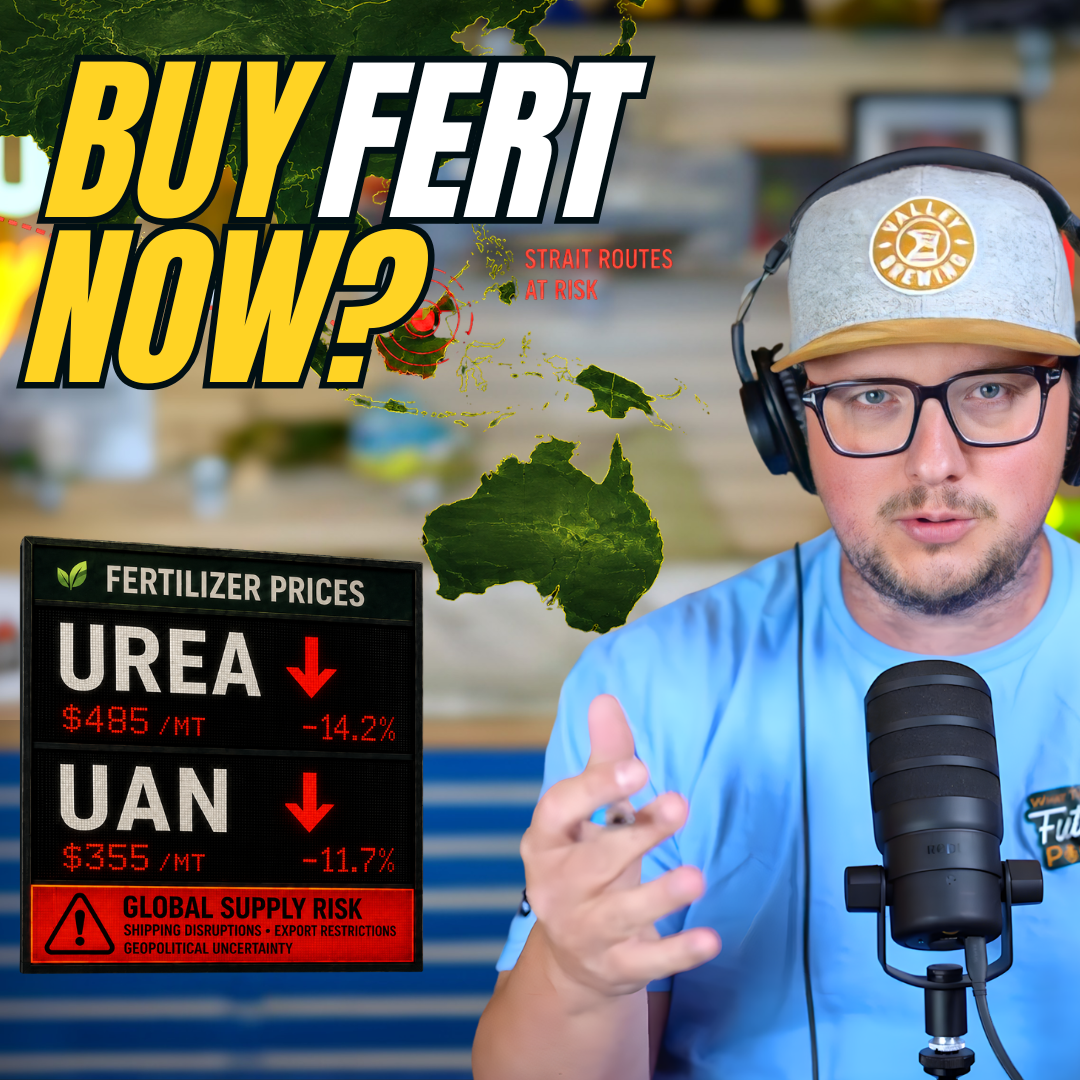
[00:00:00] Speaker A: Big question for prairie farmers is should I be buying summer fill fertilizer? Should I be buying urea? Should I be filling the tanks with ua? And I've got Josh Linville from Stonex joining me to tackle this very topic here at episode127. So let's get into it right now.
Hey folks, welcome to the what the Futures podcast, your quick guide to better farming decisions.
All right, folks, welcome into episode 127 of the what the Futures podcast. Of course. My name is Ryan. I'm your host this week, each and every week I am in the UPL studio and thankful for the support from upl.
And I know that out there we are seeing challenges, challenges with growing our crops. We've got some extreme conditions happening, which makes me think of a product like Wave, a biostimulant from upl. It is a product that's easy to use, can be put in with, with the products you're using. You don't have to put an extra pass out there. I know it's been tough for that window to, to spray this year. Talk to your local UPL rep or your retail for, for the information.
But this is a product that helps against stress, mitigate abiotic stressors. I hope I said that right. Anyways, product, we use it on our farm here in 2025, using a bunch more here in 2026 and again help maximizing yield potential, easing those stressors and improving nutrient use efficiency. Again, check that out with your local retail or UPL rep. Now this episode kicks off something a little different for the what the Futures podcast here over the next couple of weeks. So I'm actually recording 1, 2, 3, 4, 5, 6 episodes in a three day span here. So that's a lot, that's a lot of content, right? I'm taking a little bit of time off as well. Our family's big into camping and our positive moment for this week is that we are done gymnastics, we're done swimming lessons, we're done dance, we're done preschool. And now we can kick off summer vacation, summer holidays. So I'm going to do a little camping. You know, I may check in from time to time from around the campfire, but what we're doing here over the next week, well, from now to July 3rd, I've got some very important guests that are gonna cover specific topics and we're going to send those off to you in a more condensed version. We're trying to keep the episodes closer to 30, 40 minutes. Some might be a little bit less than that, but just getting. Get to that nitty gritty, get to the important stuff. And we're gonna do that for the next couple of weeks. So this kicks off what will be five other episodes all between now and July 3rd. And you gotta stay sharp because these are gonna drop one after the other. So you're probably not gonna go much past two days or three days without seeing the next episode. So we're coming at you. The what the Futures podcast is coming at you hard here over the next couple of weeks during a very critical time in your farm business. Yeah. So there we go. Of course, if you could help me between now and July 3rd, I'd love to get to 1500 YouTube subscribers. So go and subscribe on the YouTube channel. Last I checked, we were at 1480. So appreciate that. And hopefully when I get back, we can, you know, have a little party here. If you don't, you know, if you're not a YouTube person, you can. And you want to read more, then go to Ryandeni Ca and sign up for the email list. You can also check out the Crop Marketing Made Cool conference. Well, I have an episode on that coming out here later on. I guess maybe early July will be that episode. Talking about the conference, you can check out the Lunchbox Crew as well. Some of the episodes that you're going to see over the next couple weeks. Here are Lunchbox Crew content that. That we recorded with the crew in mind, so you can go check that out as well. Looks like we have room for one or two farms at this time. Last thing we do have the next strategy room, and that's going to be on July 6th. So that's a Monday, 9am I've got Tyler Durst with RBC, wonderful futures broker there. I've got Sarah Koshay with Trigger Grain, great advisor analyst in Saskatchewan. And then we also have my buddy Cody Bills. He's from Farmer's Business Network, their crop marketing division.
He's gonna be on that strategy session as well. Look for one more person, but that's what we've got for you. So that is one hour. You have to register beforehand. We don't send that out on the channel afterwards. It's just sent to those in the room that register. And we're gonna chat markets and strategy. The last one got a lot of positive feedback. All right. All right, so now let's turn it over here to Mr. Josh Linville. In a conversation that we had on Wednesday, June 17, when the price of urea across the Canadian prairies was. Was below $800 a ton for Summerfill and UAN came in, I want to say 550 for UAN for 2800. That's the number I'm going to score as a price. And Josh says it's interesting because if you look at history, these values should be a little bit lower than where they're being quoted to prairie growers. So let's get into that right now. Josh Linville with Stone.
All right, folks, let's welcome back Josh Linville here to the program. Of course, Josh is the fertilizer guru from Stonex. Josh, I know you're having a busy day, but what's the theme for, for this week? What's going on?
[00:05:58] Speaker B: Well, if I don't know if you've noticed the news, but the Middle east continues to be talked about and we finally have good news, at least for the moment. Yeah, Biola counts. Looks like this peace thing is going to happen.
And for everything that's been talked about and does our side agree with their side and this and that. It really, we've been trying to kind of get through it and look past that. I don't care what you decide saying I care what the vessels think and what the vessels are doing. And right now it looks like the vessels are starting to resume traffic. That's what we needed. That is the wind that we need to notch and I think we're finally getting it.
[00:06:31] Speaker A: So resumed traffic is a, is a good thing. Captains with confidence to sail their vessels through the strait would be a good thing. What's kind of the short term impact here, like the short term impact? Are we already seeing some of it trickle through the summer fill opportunities?
[00:06:50] Speaker B: Yeah, it's already actually been happening on the urea market. And it started before the straight reopening was even a conversation point. And so when you look back, NOLA Urea again, New Orleans, Louisiana. We talk about that because it's the most liquid market that we have. It's our central basis point.
The highest price that we saw was about $780 a ton as of this morning. We actually saw barge trade for about $340 a ton.
But a lot of that price depreciation happened before the straight was even conversation because you had situations like China was looking like they're going to start exporting. That's a major win. They are your second largest exporter in the world normally.
[00:07:30] Speaker A: Yep.
[00:07:30] Speaker B: You had I think what we're going to find out is world nitrogen demand was down about 3 to 5%. I think farmers pushed Back and said, listen, if I put on 250 pounds per acre, if I drop that 10, 15 pounds per acre, the yield impact is going to be very, very limited. But I save that chunk of money. That's your 5% right there. And I think that happened.
We are moving into a very quiet part of the year for urea demand around the world. That's naturally going to weigh on price ideas. And now all of a sudden, you superheat it with the straight possibly reopening, and we finally got a situation that's going the way of the farmer. But, man, we could use some help on the grain side, because as low as they are, as low as the prices are.
[00:08:08] Speaker A: Yep.
[00:08:09] Speaker B: They still don't make a lot of sense versus grain.
[00:08:11] Speaker A: Yeah, I certainly don't. I see some of the summer fill, you know, values here that we're seeing across the prairies, and it's still darn expensive. Josh. Like it. It is. And, yeah. And some uncertainty here with, you know, commodity prices and where grains and oil seeds have kind of gone. Grain specifically. I got to ask you a loaded question here. Like, we have the straight of hormones, you know, opening up, or that's what we're certainly watching here for traffic over the next days and weeks.
But have we fixed any underlying problem here with production? Like, have we fixed anything else in the meantime? Because there's been some headlines, there's been some talking points out there, but has anything been, like, resolved where we can sit here and say, okay, we have more production coming online globally.
[00:08:59] Speaker B: Yes. And it's going to be from the standpoint that we can finally start to move empty vessels into the Strait of Hormuz, into the Persian Gulf, and start removing some of these finished goods from those full warehouses and make that more room so they can get that production up and running back to 100%. From that perspective, yes. From a North American perspective, no.
Nothing has changed.
But again, it wasn't ever about that part of it. I know this is where people get really irate, and they're like, we produce all that we need and this and that. Oh, we actually import. But I understand what you're saying.
Why are we moving so much with the world when we produce so much of it here at home? And the fear is that export, if we're 2, 3, $400 a ton into the marketplace, they're just going to export every one of the tons that we produce to everybody else because they'll pay more than what we will. So we have to move up and down with it and that gets in the conversation of well, we should be blocking exports, we should do this and that and ever. I'm not going to tell anybody what they should and shouldn't think. That's not my job, that I've got my own personal opinion. But yeah, it hasn't changed anything from a domestic North American point of view. But it does improve the SMD globally speaking, which is a win for everybody out there.
[00:10:05] Speaker A: Okay, so we could go back to like, we can go back to a couple of years and go and review like you know, higher energy prices and that idling, you know, production or plants in Europe, you know, the war between Russia and Ukraine still exists here as of recording today. Inflation is a talking point as well. Rising inflation in here. Like I guess what I'm trying to figure out here is, you know what, we've had all sorts of things kind of happen to raise prices one time or another.
Now the Strait of Hormuz is opening up. What about the other stuff that has elevated price? Anything on that thread?
[00:10:55] Speaker B: So basically what's going to continue to keep supplies tighter, prices higher. Right.
And around the world, I think number one, we're all excited. The Straits opening after 16 weeks of being shut, that's a big win. That's a major thing to be excited about.
Do not Forget we lost 16 weeks.
Just because you open it, it does not make that 16 week period just disappear. We have done substantial damage to the global S and D because of that four month period. That doesn't go away. So that's still something that's going to linger and unfortunately I think it's going to linger until spring of 27. Yeah, European production, we still think it's around 75% of normal because of all the environmental standards, the high gas price, everything going on there. We still think that they are an unnatural buyer in the world because they can no longer produce it economically without a major loss.
China, we think that they're coming back, but man, that export program has been all over the place. They were coming back but it was a high price floor and then there was no price floor and then there was only a price for India price floor.
That is a nation to me that is telling me we want to export but we are being overly cautious to make sure we don't overdo it because at the end of the day our goal is to make sure we, we have enough stockpiles. We don't want to all of a sudden wake up one day and figure out we export 10 million tons or something ridiculous like that. So we think they're coming back, but that's not a certainty. That's not a given.
[00:12:18] Speaker A: Yeah.
[00:12:18] Speaker B: And yeah, the Russia, Ukraine, war thing is still going on. Now that's more centered around anhydrous, but it's still a nitrogen product. It's still nitrogen units and short term. I mean that thing does not look like it's going to end anytime soon. I'd love to be wrong on that, but it just doesn't appear to be the case.
[00:12:36] Speaker A: So you know, Taylor just threw a question in, in the chat here about, you know, I'm getting offers of, of mid to high seven hundreds for July urea. So this would be, I'm going to take this product and Taylor, correct me if I'm wrong, but I'm going to take the product, I'm going to store it for next spring. I don't know if Taylor's going out and doing some, some in crop application. I, I don't think so. But again Taylor, you can correct me and he says, should I be in a hurry to jump on this? And I'm going to assume that he's probably paying 20, 30, $40 a ton higher than last year. I think that's somewhere in that range. So not a big jump, but a 5% increase maybe year over year.
Should we be jumping on this? Because the trade, if you take 20 years of history and you look at the trade of what we should have done, I don't know what the exact numbers are, but it's like super high. If it's 90, 95%, like that was the right thing to do. Buy now, store it.
That's what these guys are wondering.
[00:13:43] Speaker B: That still seems like a little bit of an elevated price. And again, I'm using nola, I take it for everything it is. And again, nola's always going to be in short term in USD. So we have to do the conversion to kind of, you know, apples, apples type comparison.
But when I looked, in fact, I'm gonna pull up my spreadsheet right now. I don't wanna tell anybody a wrong thing. Let's see, it was June 19, 2025. The Nola Urea Barge market average was $405 a ton.
This morning it traded at $340 a ton.
Our Nola market is down 65 bucks a ton year over year.
[00:14:20] Speaker A: Yep.
[00:14:21] Speaker B: So from that perspective, I kind of scratch my head. I'm like, okay, maybe they're just a little bit delayed and maybe we'll see some better prices.
However, I will tell you the common theme in fertilizer right now is confusion. It's uncertainty.
[00:14:36] Speaker A: Oh, great.
[00:14:37] Speaker B: Yeah. It's even more so than usual. Right. It's never like certain. Right. But this is even worse. Nobody, everybody's kind of looking around like, you sit there and say, okay, 350. Can you see that price going down? Oh, absolutely. Because of xyz, you see it going up? Oh, absolutely. Sure. Yes. Because of this, this and this. Which side do you take?
I don't know.
And I think if the people who are in this every single day are struggling with a point of view of a definitive price direction on it, I think that needs to factor into your, your decision making process. And frankly speaking, the other challenge that I'm going to combine with this.
Do you sell all your grain all the single same day?
None of us do.
[00:15:17] Speaker A: If you did, hopefully it was like two or three weeks ago, but then it would have been great.
[00:15:22] Speaker B: But yeah, yeah, no, I'm glad my dad didn't listen to me and sold some of his corn.
But that's the thing. We sell our grain in pieces and in layers.
With all the uncertainty, honestly, I think it's worth probably doing the same thing with fertilizer this year. And I'm not saying that trying to get around and not make a. I'm not trying to give you a political answer.
I think that's the best way we can combat all this uncertainty that we have in the marketplace today. I think we need to start looking at and say, okay, that value, is that good or bad? How does it look for your operation?
You come back and say it doesn't work. Okay, let's wait and see if it doesn't come off a little bit more if it does work and see what happens.
[00:15:59] Speaker A: Yeah, no, I'm with you. I, I think like the traditional, you know, way of, of buying fertilizer has been, you know, figure out what you kind of need, your blend, the agronomic side, and then go and get it Right. And some people go and choose to get it now for next year. Some people will choose to do it after harvest or at the tail end of harvest. And some will wait for the weather to cool down and get cold and then they'll take it. So all sorts of things.
2025, Josh gave us many different opportunities to buy at similar values. Maybe not to the exact dollar, but we had chances.
This time last year we had some more opportunity. Throughout the summer, we had opportunity in November, early December.
It gave us a lot of, a lot of time. And then of course, the calendar flips over prices naturally climb across the prairies.
There's a guarantee there for some reason. And then of course we have a war that breaks out between the US and Iran.
Long winded way of asking would it be a safe assumption or maybe nothing is safe but to kind of, you know, assume that you, you'll have a couple stabs at this here in 2026.
[00:17:21] Speaker B: Yeah, I don't think anything's safe. I don't think anything normal. Again, uncertainty is kind of the prevailing term out there in the marketplace. I do think it just again this assumes that grains don't all of a sudden go on a tear and start moving higher. Which hey, if that happens, I'm more willing to be wrong on every single thing that I say because we're finally seeing some support out there. But if not, I think you're going to see this stuff come in ways I think, you know, like today everybody's kind of pushing it. We're seeing the same thing in the US Distribution side is pushing hard to get people oh buy it. We think it's a great price.
Okay, let's see you bring in some demand.
Well after, if they even start to support prices. I think now all of a sudden everybody thing goes quiet, people stop doing stuff. You get into the July, August time frame, nobody wants to take anything during that time of year. So yeah, I think it'll came in waves. I stay short of saying oh yeah, I think there'll be other opportunities out there. But you know to your point, that happened if you look at last year. Yeah, we started in the lower three hundreds and ola there were prices in the three hundreds closing out the year before it started on that terror out in 2026.
[00:18:22] Speaker A: Yeah, no, and I, I think like I go back to you know, just the odds of what happens, you know maybe between now and the fall is one, one circumstance. But then you know, across the Canadian prairies it's just a guarant, you know, I don't want to say guarantee but it has been a guarantee high odds that you know, if you wait the price is just going up and up and up because of logistics and whatever else and away we go. So I do think last year we saw opportunities of negotiation and I, I can't like sit there and say, you know, the retail took less margin during this two week window or four week window. But I do believe that negotiations happened.
Margins got a little tighter for a window there. I'm sure everyone did just fine and made all the money they needed. But there was negotiation that could Occur. And it, It's. It seems to me that, you know, farm economics are, and I hate to say this out loud, but poor or poor enough that it. It's a decision that farmers are putting more. Wade into more, you know, thinking more strategy around it. Maybe not just taking the checkbook out and saying, okay, that's my price, thank you, you know, I'll buy that. And maybe that's causing more, you know, maybe a little more hesitation from the farmer side and maybe more negotiation. I don't know. I don't know if you got anything you could add to that or if you think I'm completely off, but, no,
[00:19:59] Speaker B: I think you're dead on. Every farmer I talk to, the first thing they want to talk about is how we're not making money. It's not a situation of how can I maximize my profits, it's how can I protect my losses, how can I stay, keep from making a bad situation worse? And I think it's really, really key because most of the farmers are in that state of mind, and I think that they are because of everything out there. Well, the retailer is going to feel that as well, because they're talking to the farmer every day, and they're sitting there talking to them and they're being told, hey, I'm not making money. I don't have the checkbook to, you know, spend on it. I got to go talk to the banker for the first time. You're. That retailer takes that home. And I know there's sometimes a little bit of a grind between the farmer and the retailer, and I don't think there should be. Most of the retailers I know are great people just trying to do best by the customer. They want you to succeed because you're their customer. They want you around.
But when all they hear is negativity, fully reasonable, but when all they hear is negativity, they're going to be cautious. They're not going to be as willing to step out and buy some of these prices. Even with it down as substantially as what it is from the highs, there's still going to be a little bit more trepidation. So I think it's going to be a lot more stingy, delayed, slow market to step forward. And I think it's going to cause some frustrations out there.
[00:21:13] Speaker A: All right, fair enough. Lloyd asks. We usually purchase all of our.
All of next year's fert in July, August, and it gets delivered in one shot in August. We like the convenience of getting it all in one or two days. Basically, it all Happens in that window.
Hearing you say spread out buying. But can you get all the product in one shot still?
Well, so Lloyd, I'll just kind of add to that. So you know, if you are taking your product in in August, I'm assuming that your buying window is going to be or your pricing window is going to be between now and August. I don't know if a retail will allow you to take the physical product and leave the price float. I think that would be a brand new thing that you would be starting in the Prairies, Lloyd. So let us know. But you're probably, if you're taking it all in August, no matter what, you're just condensing your your pricing. You know how you're going to spread out your your purchases. You might buy some every week for the next eight weeks and then take it all in August. But once it's in your on your farm, I'm assuming that, that that's it from a price movement, Josh, unless you got some fancy offer in the US that we can influence up here in the Prairies.
[00:22:26] Speaker B: Actually again I'm putting a little bit more of our broker hat on here but I know the CME rolled out their 10 ton urea contract again, short ton USD so we'd have to think about like the currency conversion, the short term, the metric version. But the concept behind this is something that I've been pushing CME for years and years to do it and they finally got it rolled out.
It's so that farmers have a few more tools in place. So in that case if let's say you're sitting there saying Josh, I really want to buy it all at one time. It is worth a good amount of money to me to just have it show up in two days so I don't have this spread out over weeks. And I listen, I get that. I fully appreciate that.
You know, in that case you can sit there and say I want to buy it all, I want to have it shipped in a two day timeframe. But I don't like having it all priced. Well in that case you start having a consideration of go sell some of those 10, 10 contracts so that let's just say the price does go down, you're going to lose it on the physical position you lost or that you bought, but you're also going to make it up on the paper position that you shorted.
So there are some things like that you could probably look at.
You have to go talk to your local broker and see about could we get in there. But I'LL tell you what, been seeing really good day to day bids and offers transactions liquidity out there.
[00:23:37] Speaker A: Good point. Yeah, that's a good point, Josh and I think something that, that we need to get in the habit of referencing and looking at getting quotes on. So no, good point for sure. Okay, maybe just two more quick ones from my side here.
Now, when you look at the Strait of Hormuz, going back to the Strait of Hormuz, is it urea or is it sulfur that sees the biggest benefit of flow and maybe an impact to lower price?
Sulfur, Sulfur.
[00:24:09] Speaker B: Now I'm no sulfur expert. I have googled a lot of the information I know for sulfur or I've listened to other people who are really smart in the market. I don't know that much when it comes to it, but when I googled it, half the world's tradable sulfur supply comes from the straight Hormuz. About a third of the world's urea comes from the straight Hormuz tradable.
So I think just from that simple standpoint, I think it's more on the sulfur side. And when you look at it, the urea price had already corrected significantly from the highs sulfur has not. So when you think about what's the, what is the benefit from the day the straight is opening, I think there's significant more downside on sulfur than what there is on the urea market.
[00:24:48] Speaker A: Okay. All right. And so sulfur maybe wants, wants it, you know, the, the action to be proven to it like the end of the war to actually be done and kind of prove it to me. Whereas urea is looking at and saying okay, well we're anticipating this, so let's start the decline.
[00:25:06] Speaker B: Yep.
[00:25:07] Speaker A: All right, so is this a fair comment to say that our, you know, the, the trajectory here of price or, or the biggest influence if we take out the straight of Hormuz, let's pretend that that's fixed. Let's just pretend it's fixed.
Is it China now? Is it China's actions of yes, we're going to export urea or no we're not going to export. Is that as basic as it could be where you just keep an eye on what China's going to do?
[00:25:37] Speaker B: I'd say yes. I would want to sit there and tell you it is European production rates. But the only reason I don't really list that is because I don't see an improvement there. Unfortunately right now we always talk about and say, hey, they're about 75% production rate versus normal.
I don't think 100% is normal anymore. I think 75% is actually the new 100% and I think it just stays that way. I think we've lost that production. Okay, we could talk about the Russia, Ukraine thing, but again, that is much more on the anhydrous market, not the urea market.
So I shy away from that. So, yeah, I would say China right now, assuming this peace thing holds. China is the. They're in the limelight right now. They're in the spotlight.
[00:26:17] Speaker A: All right, fair enough. One more question came in from the group, from Jason, talking about liquidity on the contracts in the cme. He's just wondering how far out you could trade is there or how far out there'd be some liquidity.
[00:26:31] Speaker B: I can tell you as of yesterday there was, there were trades happening in September.
I typically, the day before that it was August. And so these have typically the market makers, when the CMI rolls out a new contract or a new product, they'll hire these market makers and they just, they constantly put in bids and offers. So the market season says, hey, there's liquidity out there. I can get in and out of these positions. That's what I'm going to do.
They've been doing a really good job daily putting in more narrow price spreads than what we see on the normal contract sometimes.
But as far as the timeframe, I would tell you three months is usually a safe bet. So right now, July, August, September, you should be able to see day to day bids and offers, not to say further out. Can't be done. You're just not going to see the numbers nearly as often.
[00:27:19] Speaker A: Yeah. And decision time comes at expiry or near expiry if you're, you know, going to roll your hedges or what you're going to do. So.
[00:27:26] Speaker B: Okay, well, remember, with fertilizer, it's not a physical delivery mechanism. Right. We can take these things to settlement. It's a financially settled thing. And that's one of the things the cme, I think smartly has done is it takes away the whole thing. Like, oh, crap, if I get to the end of the contract, I've got to go deliver corn or I've got to go pick up some cow somewhere.
It doesn't have that mechanism which gives a little bit more confidence in the marketplace.
[00:27:48] Speaker A: Yep. Okay.
All right. And one last one for you here. And again, we appreciate our retail partners across the prairies and wherever you're tuning in.
I believe retail, you know, managed every last drop of urea as best they could with anticipation of this decline, but yet we still had some weird things, weird events where, you know, one day a guy's trying to get a little bit of urea to finish up or some blend to finish up, and he's being quoted about 1200 bucks a ton. And then if he would just pick up the phone and call an hour south, the price was, you know, around $800 a ton for urea. Like in, in simple terms, Josh, like, why would you see that? Like, why wouldn't you see more consistency? And is it as simple as the position we still have position that we need to tidy up at 1200? These guys don't.
[00:28:49] Speaker B: Fertilizer is still a flat price risk marketplace. And what I mean by that, if you go into a local elevator and you'll sometimes see, like, if the corn price goes up, they're like, oh, those elevators are just killing it with the price up and this and that. No, they're not. Every single bushel in that place is hedged.
They care about the basis differential. They don't care the prices up, the prices down. They care about the basis deal. And that's why you see so much conformity in the grain markets, because everybody is doing that.
When it comes to the fertilizer market, we're still like what the grain market was back in the 50s, 60s, 70s.
We're just now starting to learn how to hedge and do these sorts of things.
And it's going to be a while before everybody kind of gets on the same page and starts doing this because of all the price risk that's out there.
So if everybody is flat price risk, that means prices are going to do, to your point, weirder things. It's all going to be based on what they have sold, what don't they have sold, what are they long, what are they short? All those things are going to dictate it. Whereas if it was just a basis situation, all that doesn't matter. It's just that differential price.
[00:29:56] Speaker A: Yep.
Yeah, I was chatting with a gentleman last week, you know, about this and, and just how it kind of doesn't feel great when you're a farm that unfortunately bought, you know, supply in the spring or right before planting, you plant the crop and then right after you see this big drop. And he said, well, Ryan, you know, do you like capitalism? I said, yes, I do like capitalism. Right. And he said, well, that's what it is. Like, there's a product, the. There's just so much around. There's just so much inventory available and, and infrastructure. And so it you know, they do their best to extract their margins at that time and then it changes. It, it all changes once. Once the demand eases or goes away from the farm, then it all changes again. So he said, you just gotta relax, Ryan, because it's capitalism. And if you like capitalism, then, you know, what are you stressing about?
[00:30:54] Speaker B: So anyways, yeah, well, you know, I'll say we, a lot of us look at volatility and we see that as a negative. We see volatility and we're like, that's terrible. I hate it. I don't like it. I just wish things were steady.
There's opportunity and volatility. It's on how you look at things, right? I mean, and listen, my wife is always getting on me. She's like, why do you take everything negative? It's just the way I am. She's like, all the worst case scenarios that you play up in your head never happen. If you just look at it a little bit more positive, look for the bright side of things, you'd be in a lot better mood. And I think if we were to approach the markets that way and say, listen, yeah, it stinks. I'd rather not have situations with grain prices as low as they are and fertilizer prices as high as they are.
But there, if you look back in recent years, there's been some tremendous opportunities.
The problem is I'm putting myself in the same camp and see it, I wasn't looking for it. And we got to do a better job of embracing that because it's not going away. Change is the only constant. Life.
[00:31:49] Speaker A: Yeah, that's a great way to end it there. Josh, I certainly do appreciate your time and I think just a key takeaway for me and for those tuning in here is, you know, making the plan for next year, the 2027 plan, and just starting to figure out your numbers and your budgets for next year. And then working backwards, if you have sold Nav 27 canola at 750 a ton, you know, does it make sense for you to come now and buy some urea?
Have you forward contracted some spring wheat or some, or some Kansas wheat? Like, just start looking at the numbers and if it starts making sense of feeling good, then you can turn the switch on, on, on maybe buying some supply.
All right, Josh, we certainly do appreciate your time joining us here again this week. And I know you got a stack day.
You know, hopefully you get a, a vacation here. You just had a vacation, a, a road trip that you took, but hopefully the next one's not far, far away for you.
[00:32:48] Speaker B: Yeah, we'll, we'll find some time. We'll. I think we got three day weekend coming up here, so yeah, we'll find some time to maybe open up one of those bourbon bottles I brought home from the trip.
[00:32:58] Speaker A: There you go. And people can catch your information. Where should they go if they want the latest and greatest on the fertilizer markets?
[00:33:06] Speaker B: Oh, still doing stuff on X, Twitter, whatever you want to call it@J. Lynnvilleford if you want to find me there. We're still putting out the farmer newsletter thing. You can always Google Stonex Farmer fertilizer newsletter. In fact, I just did a video before coming on here and I'll get that sent out with some commentary shortly.
But yeah, just, I don't know, it seems like I'm meeting myself coming and going, so I don't even know where I'm at anymore.
[00:33:28] Speaker A: All right, Josh, well, we certainly appreciate it, man. Take care.
[00:33:31] Speaker B: Thanks. See ya.
[00:33:35] Speaker A: All right, folks. Well, just a great conversation there with Josh. Certainly appreciate it. And of course putting the show on and you know, able to bring in some great guests like that. I certainly do appreciate the support of organizations like John Deere. And of course I like talking about harvest profit. I think this is a great time. If you are a farm, you know, you're running the green paint. You are, you don't have to be running the green paint, but let's say you're running the green paint and you've got John Deere operations center like dialed in maximizing that, that product. You know, it's helping you make those key decisions. Just bringing in harvest profit now, bringing that into the conversation, tying in your financials, it really helps. I created my 2027 plan.
Click of a button, some tweaking. Could I say 30 minutes? I'll say 30 minutes to get my 2027 plan up and running. And that's because I'm a bit slow. So you could have done it a little bit faster than that too. But anyways, harvestprofit.com check it out and we're gonna have those, those folks at the Crop Marketing Meet Cool conference as well in December here for eating your veggies. I may not have eating your veggies on the next episodes because this is the first one that's going to drop in this series of what did I say five more. So eating your veggies. There may be a gap here, but what I do want to highlight, you know, we are, we talked about marketing Canola or pardon me, wheat weeks ago we've talked about marketing Canola. We're now trading on the backside of this rally and you can see if you draw a line, get your crayons out like I have, take the top and where we're trading at, draw a line there. You can see we're kind of back testing this decline. It's at a time of year, seasonally where prices tend to fall apart as well.
So I still think at 750Nov, canola or above, there's still some action to take there. And like I said in cup of coffee this week, you know, I we were asked if put options of if it was too late, too late to buy puts. Well, the answer there is no, it's not too late. And the reason being is that it protects a floor. It protects worst case scenario, it protects against more downside. It also leaves you open in the cash market to sell at higher values when and if a rally occurs.
So it's not too late, you know, will you maybe give up some premium or something like that at times? Sure.
But there's still a great window here to buy some puts, protect worst case scenarios and keep yourself exposed to to some upside. All right. Brian Como with Ireland, Como Lafoy. He messaged me and said hey Ryan, I liked your comment about puts but he said, you know, one of the favorite, my favorite things to do is to, you know, maybe sell cash and then replace with an out of the money call option, which that is also one of my favorite strategies as well because it keeps that upside potential open and also helps protect you against a production shortfall leading to a buyout. It does have some built in protection there as well. It's a little bit of an insurance policy.
All right. And so for eating your veggies here, I like the put option still on on Canola. The second thing I'm going to throw in here is for wheat.
I'm not expecting a sharp rally in wheat until or unless weather gets involved. Weather in the northern plains or the prairies that leads to dryness and heat concerns. That's where I would expect to see a bit more strength. But I still as a farmer out there, maybe you were busy and you missed the rally.
Now we're working our way on the other side. You know, as of recording, seeing some really good strength in Kansas. Wheat up 15 cents here as of recording and spring wheat also up 12 cents. We are on the rebound. A lot of farmers asking like where do you sell and if I dial it into spring wheat, you're looking for points of of potential resistance here. And I'm going to keep it nice and simple. I'm not. I don't know the fancy stuff, I don't know the fancy terminology, but when I look at a chart, you know, I do see some resistance at $7.
I think that's a noteworthy level. Currently trading at 670.
We gotta get through 675 first or 680.
It's not a straight path to 7, but that's where I would consider some targets. Right around the seven is where I would consider it. Outside of that, if we rally above that, I'm probably doing a small increment at $7 futures, and then I'm pricing into that range. Now, I still sit here today.
Wheat is. I'm not losing sleep over wheat marketing.
I'm very comfortable to patiently wait for rallies to develop.
I don't expect a big spike here, but I would encourage, you know, just rewarding strength. If it gets above some of these key resistance levels, you can do a little bit more selling. But I certainly wouldn't be losing sleep over my wheat marketing here at the end of June. And the reason I say that is because quality is always something that's on my mind. The other thing with wheat is from my position, I feel comfortable with my sales on, like, I'm very comfortable with. We're at plan. I should say it. The plan that we've created, we're at plan.
And so for me, now, I want to reward strength and I want to reward the next phase of the plan. So I guess that's how I boil it down. All right, last thing here for eating your veggies is just making that 2027 plan. We talked about it with Josh, like, making the plan, getting things dialed in for next year. I'm not going to sit here and say that I have all the answers and all the solutions. I wish I did. But I know that going and making a plan starts to bring in the numbers, starts to make sense. You can start to justify some decisions and just brings clarity. So I really like making the 2027 plan. And not to.
Not to throw this out of context here, but I'm already late in saying this because in the crop marketing workbook that we send out, I do this in April is when I start. That's when I start doing it in May. I'm already checking prices and margins for next year in June, I'm just doing that a little more frequently.
In June, I'm already. I'm creating my harvest plan.
Space, logistics, cash flow, for the 26 crop. Anyways, that's where I sit. All right folks, so that's it for for eating your veggies for this week. If you enjoyed the show, please tell a friend or a neighbor if you want to sign up for Futures Updates, we still have room. A few of you have caught these nuggets at the end of the episode, but just email me ryanfutures Podcast ca let me know what you think of the show. If you want to join the Futures text updates, just say, hey Ryan, I want to join. Do you have a spot for me? And all you do, you just get updates. Canola, wheat, corn, beans, crude. It's all there. Up or down, three times a day. And away we go. All right.
Okay folks, I appreciate you. Thanks for hanging out this week again. This kicks off the first of five more shorter episodes with key messages between now and July 3rd. I appreciate you stay safe out there, have a good spray day and we'll talk again real soon for the what's Futures Podcast. My name is Ryan and I'm out of here.