Episode Transcript
[00:00:00] Speaker A: Urea prices jump over the last week. What the futures is going on here? I want to talk about canola strategy this week. Crop rankings. Did that jump in yellow P values actually move them up the ladder? A new crop went and found the bottom. So stay tuned for that. It's going to surprise you. Lisa Porth from AG i3 is going to join me as well. We're going to talk about the state of crop insurance for prairie farmers here in 2026. Episode 108 coming at you right now.
Hey, folks, Welco. The what the Futures Podcast, your quick guide to better farming decisions.
All right, folks, welcome into episode 108 of the what the Futures Podcast. Of course, recorded each and every week in the UPL studio. And of course, going to remind you for a couple weeks yet, getting there. February 15th, that's the deadline for the. Well, the big money, right? The big rebate, Smart Buy Rewards. That is the deadline for the big one. So just keep that in mind. We're gonna meet with our upl rep on the farm next week. 2026. We have to do as farmers in the prairies here, not just the prairies, everywhere, but we gotta be sharp. We gotta sharpen our pencils up right for 2026. You know, one of the things you can do is just kind of poke around here, poke around at some of these programs that are out there and see what impact that could have on your farm. If you wanna drill down, even without reaching out to upl, to your rep, let's say you're a little shy. You can go to uplcorp.com, go to the Canada button there. You know, get to Canada. Go to the far right of the screen, there's like three little lines and there's the Grower Rewards tab. All right? At least on my computer. Scroll down, you'll see, like, grids, numbers, percentages. Keep scrolling below that. Keep going, keep going. You're almost there. And it says, download the UPL Grower Rewards Program Calculator. Hit that button, you can punch in your acres, punch in your products. It's super easy to use. Gives you a dollar figure. It doesn't flash like, bang, bang, bang, here's the dollars. But it's there and you can see what that potential is for your farm. It's right there, guys. It's just on the website. You can do it. Don't even have to talk to anybody until you see that number and then pick up the phone. Alrighty. We gotta be Sharp here in 2026. All right, folks, you know if you are hovering with your mouse or hovering with your clicker, go and hit that subscribe button on YouTube or wherever you get your podcasts. I appreciate it big time. I know that there's a pile of stuff being put out there. And the fact that you spend your time with me, even if it's for 10 minutes, 20 minutes, an hour, whatever it is, each and every week or every few weeks, I do appreciate it. So thank you so much for that. We got a lot to talk about on the show. All right. We got some strategy talk. We're going to talk crop rankings. Lisa. We do. We go in depth on our discussion. We. And Lisa was on the show like a year and a half ago or something like that.
But we go in depth here. And I want to say this right off the hop, and I say it in the interview as well, but a guy three, Lisa, they didn't pay to be on the show this week. I have a warped sense, a warped mind when it comes to insurance. And part of that is when I think about insurance, I think about crop marketing, which is completely messed up. But I want to blame the folks or, uh, acknowledge the folks at afsc. They did that to me. They did that to me because some, at Some point in 2011, 2012, 2013, farmers would come up to me and say, ryan, look at my crop insurance package. What should we do about crop marketing? And I was like, what? We had to figure things out, like spring price endorsement, variable price benefit. I remember pitching farms being like, oh, you could sell everything. You could sell as much as you want because your variable price benefit's going to kick in at this level. And if it pays out and you're in a buyout, use that money to buy out your contract. Sell everything. Thank you for, for this great, wonderful insurance policy. Insurance package. Right? It warped me. I'm a little bit passionate about trying to figure this stuff out and trying to help help you a little bit. I don't know what you're going to do, honestly. It's your farm, it's your business. You do what you got to do, right? But maybe there's something here that just gives you an edge in 2026. I don't know. I want to uncover it, though, and uncover it with you and see is there something right. We have a couple of insurance episodes here back to back. I really want to get this done and figured out and out of the way so that we can focus on the big stuff, too. Right now, my. I do have one public announcement that is in line with the insurance talk.
And there is a broker in Moose Jaw that I am going to have to track down. All right, I've got. My message is number one, get yourself a darn. I put a different word in there. Darn good insurance broker. Okay, Get a good one. Because what is happening with the big snows in northern Alberta, knocking over these, you know, caving in these bins, caving in these sheds, shops, all this stuff that's going on, it's, it's, it's crazy. And what's happening is that people that are experiencing these losses, they're learning some stuff and a painful lesson. And I was chatting with one of my clients who lost a building here right at the end of 2025. And this building, the Spoosh job broker. I'm not going to name names yet, but, you know, answer your phone. A broker that will not pick up the phone and return a call from a client that is facing a loss and trying to sort through this. All right, I don't know, we might talk about in further detail here in the next few weeks. We'll see. But for you as a farm out there, when you get a cold week here. Yeah. Review your insurance stuff. Review, make sure you're covered. Because, man, if we think margins are tight in 2026, imagine trying to cover the cost of a.
A new shed or something like an event that you're not prepared for.
I don't know, folks. It's just, it's a little frustrating right now, okay? That and this. Actually this whole conversation happened after this interview. So it's just. I want to put it out there, make sure you have a darn good broker and that you are up to speed on your insurance and what you're covered for. All right, all right. Now we did a cup of coffee with me. What's from what, the futures on Tuesday. That was our first one, January 27th.
It's a little bit of a production, right? I. Fumbling on the buttons there. But we got through it. Clarenbach, always a good sport and joined me for the first one.
And how it works is Tuesday mornings, 8am Mountain, for 20 minutes. A solid 20. Bam, we're done. It doesn't matter if you, the guest has more to say. Whatever. It's done. All right, so solid 20. We talk strategy, we talk markets, and I have a bucket of names. Analysts, advisors, folks from the prairies. Monday night, I pick a name out of that bucket and I message them. I'm like, hey, you got picked this week. Here's the link to join me on the show Tuesday morning. No prep, no nothing. Just thanks for putting your name in here and let's rock and roll. So never will, never have back to backs.
Always somebody new each week.
But yeah, it's kind of spontaneous and exciting. Right? I'm having some fun with it now. It's inspired by my favorite YouTube show right now, which is called Kill Tony, which is a comedy. Comedians go up and perform for 60 seconds. It's crude, but, you know, if you're bored one day, check it out. But you know, we had like 70 people attend the live version of the show. And then we did put it out as recordings after. I don't have to tell you that because you listened to it already. I could see in the stats that you picked up that we put something out on Tuesday and we edit it. We actually got that down to like 12 minutes for you guys and threw that out there. All right, there were a couple questions. We got two questions. One was about, you know, if I was bullish barley, and answer that right away here. And the other one was about crop rankings, which we'll get to in just a moment. Now, was I bullish? Am I bullish barley? No. Well, I shouldn't say that. I've been saying this for months, that I think barley just does this, this little grind higher, just. Just this little, you know, just a little choo choo training. I know I can. I know I can. Just slow, slowly making its way up. And that's what it's been doing. Feedlot Alley hasn't been doing me any favors lately, but the export programs have been. Have been good. And then I did chat with a grower that had some malt barley, and the offer that he received was just pennies over the feed market. So I'm not overly bullish malt. I hope we get a few sales on and I hope we can get something done closer to the $6 level in Alberta anyway. Maybe it's a 575 in Saskatchewan. I like moving my malt early anyway, that's an aside. I'm not bearish barley. It's just to me it's a slow grind higher. And is it covering your cost of carry? Is it covering your. Your interest costs that you'll have to figure out for yourself. But yeah, I did sell some barley. Actually, I sold some barley today. They want it, we had it. We wanted to get it off the farm. And away we go. Right? So, yeah, so I'm not a big bull on the barley. I just slow grind and then Crop rankings we'll get to in just a second. All right, now I want to get into just quickly this week. So positive moments I've been having.
I've been having my. Well, number one, my music algorithm here has just been bonkers. It always is. Like, as a parent, like our. Like, my music, like on YouTube music, you get like nine. Like a grid of nine squares and there's like three sheets of those, right? The Blaze Kids Monster Truck show, like, the soundtrack, like, it's in there.
Gabby's Dollhouse is in there. We've got Blue's Clues is in there. And then it'll go to, like, Avicii. Tragically Hip. Like, if I just hit mix, it's a. It's a mess, right? But anyways, I've been getting some. Some of the. These older. Like, do you guys remember, like, pirate radio back in the day? Like in Saskatchewan? Like, pirate radio that you would like, I don't know, be like on the weekend, I think late at night. My wife would know.
But anyways, it was like DJ music, right? And I, I did some DJing back in the day. Not. Not a real DJ. I played music in small town Saskatchewan at dances and weddings. All right, whatever that was, played a lot of Jesse's Girl and Saskatchewan Pirate Song. Never mixed them together. But my music, I've been thinking about Brandon, Manitoba, the conference and the hockey. It's kind of this hockey theme that we're going with. And so I've had a bunch of this old dance music going on, this DJ type music. And then I decided we're gonna open the conference. We're gonna open it with We Will Rock youk by Queen.
That, that music, that song popped into the matrix this week. And I think that would be a fun one to kick off that conference.
Other than that, this week, you know, I. I just talk about the kids all the time, but we.
Yeah, well, the kids were getting over some sickness, but the kids have taken on some new challenges here.
This last, I guess, this last week, basically some new things.
And you know, as a parent, you hold the anxiety or you hold, like you're cautious around it, right? You sit there and say, oh, are we like, is this okay? Are we pushing them too much? Or how are they going to do in this situation? And then time and time again, they just. They just blow you away. They kids, they don't care. They don't have any. They're not in their heads about anything.
And so both my kids did some new things this week that, that we, you know, we Were kind of hesitant on and they just had a blast and enjoyed the events, the, the classes they were in and just, yeah, just blew me away. So, so that was great. Last thing for, for me, for positive moments for this week is I'm doing something different. Every time I get asked to speak. It's about can you come and do a market outlook, guys? It won't be long. You'll just be sitting in front of a room, type it into Grok or whatever AI platform. They'll do a market outlook for you.
I don't like doing market outlooks, to be honest with you. I, I, I like talking strategy.
But I'm going, I'm heading out to Toronto in April and I'm going to hang out with the osc, which is the Ontario Securities Securities Commission and I'm joining a panel there.
Yeah, jumping on stage in Toronto and joining a panel. And when they reached out, when they reached out to me, do your homework. And I'm like, I don't see a lot of other folks like me on the panels here. Like, you sure you got the right guy?
And they were like, no, yeah, we got the right guy here. We're excited to have you and this is what we're talking about. And what do you think? And, and so yeah, I jumped in with both, with both feet and I'm looking forward to it. So yeah, a little different when it comes to presenting and yeah, certainly going to have some fun with it. All right, let's, let's keep moving along here in the show. I got my guide functioning here as well. Now I do want to give a. Of course our, our show sponsors are fantastic. It doesn't matter if it's John Deere, Brett Young, upl, they're all great.
But I, I've, I've been living in harvest Profit this week. HarvestProfit.com you go check it out. It's crop marketing. It's like a non a. No, it's, yeah, it's not even a second thought. It's, it's where we track our financial performance, our green contracts, all that good stuff. And I just, there's times of the year where you live in it and right now I'm just living in it. When I meet with my farm clients, when we're doing stuff for our farm, this is where we live, right? Numbers, scenarios, financial reports, it's all there. If you're looking for clarity and non emotional decision making, there you go. And I did. I got a call from a farm the other day. They were having a seminar at their dealership, and harvest profit was involved. So I don't know if that's at every dealership, but check it out. And again, a little peace of mind. All right, Lisa's coming up here in just a second.
But before we get to Lisa, let's just rattle off a couple quick things here, then we'll go over to Lisa. Great discussion on crop insurance. And we'll wrap it up here with eating your veggies and ask to send in questions and whatever else I can come up with in the last couple minutes here. So. Crop rankings calculator. I got a question from Alden, and he said, ryan, have your crop rankings changed since the 15% climb in the yellow pea market? And my initial answer was, yes, they've changed. But yellow peas, they still kind of suck. For me, for our, Our farm and our situation now just.
It doesn't matter, right? It's up to you. It's you. It's your crop rankings. It's your. You got to figure this stuff out.
It might be in the top three on your farm, I don't know. But for me, certainly even with the climb in price, it's still in the bottom now. It's not the last place crop anymore. It was sitting at last place. Now it's risen a couple of spots. But I'm still. I'm still missing my. My goal here by 200 bucks an acre. All right? So for me, you know, if I'm going to put in a pulse crop, a pea crop, I'm number one. We're. We're green pea growers. So that, you know, that one right there, I can add 110, 120 bucks an acre over the yellows right there. So, boom, that's just an automatic, right? And then there, before I'd go to yellows, I dabble in maples, I dabble in red lentils, might even dabble in faba beans before I go into yellow peas. So it. It rose, but not by much. What. What happened was my rye situation.
It's after yellow peas now in the 15th spot. And then oats.
Oats actually dropped off a cliff, which apparently is. Is needed. I shouldn't say off a cliff. It's down. It's. It wasn't in last place. Now it is.
It's fallen. But when you get bid, new crop oats at 3 to 3,25, it takes the sizzle out. And it, you know, the farm shows, they're saying, hey, we got way too many oats. Guys are going to carry all these oats over and we need less acres in 2026. Well, mission accomplished at $3.
I will go and at least on our farm, we will go and plant some wheat and aim for, oh, let's see here, 30 bucks plus another like 160 bucks an acre. Better wheat scenario for us anyway.
So that's my crop rankings for this week. Canola still riding way up there. I've got some love for maple peas in the 12 spot. I got canola in the 12 spot. They're just kind of back and forth.
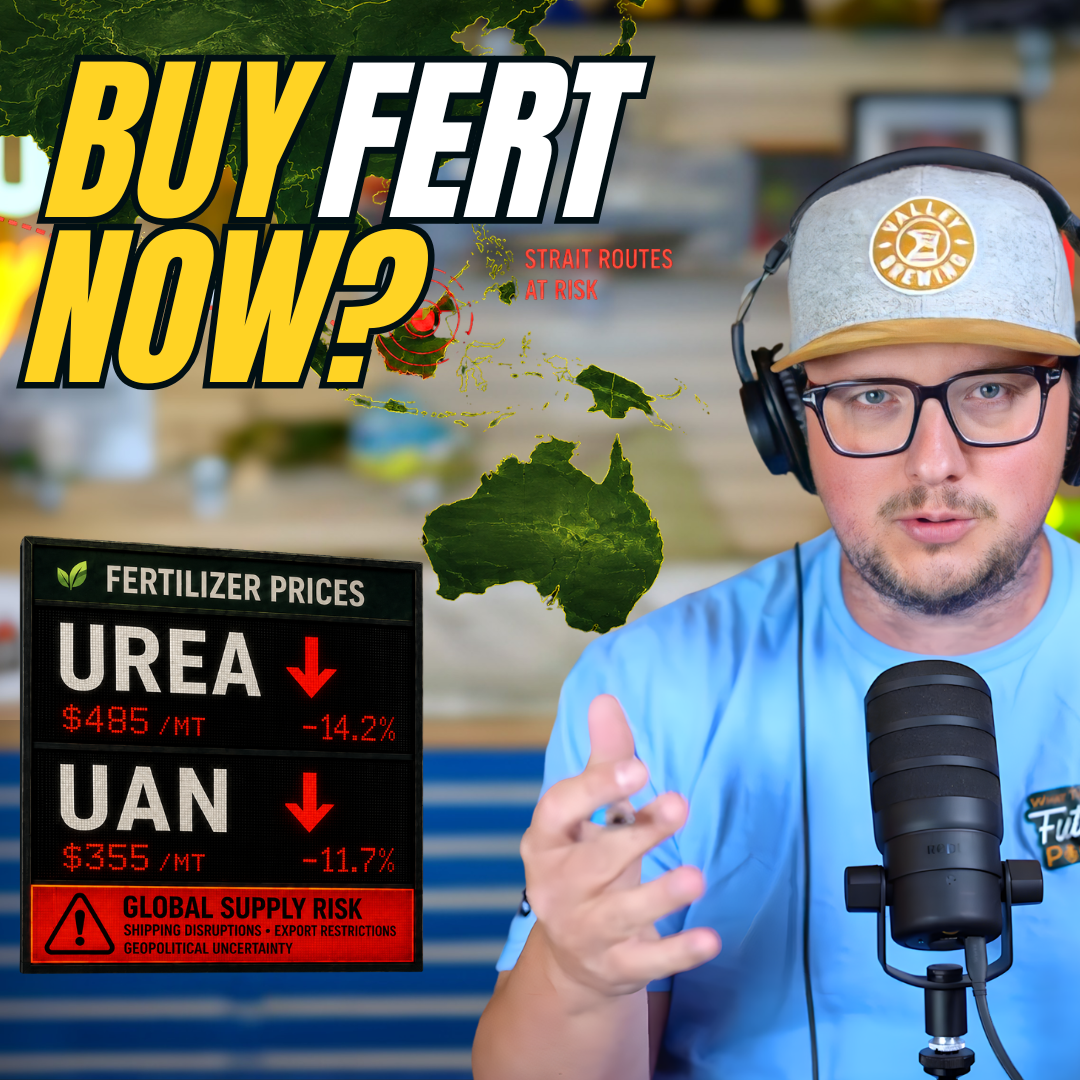
Of course, throw a specialty canola up in the mix there as well. My utility wheats, my cps, my general purpose wheats, those wheats quite high in the rankings as well. Lots of bushels. And I'm a little, I don't know, I'm a little friendlier towards price now. I should say I'm reading way too many analysts that are bullish on wheat now. So I probably need to walk that back. But the wheat scenarios, they're not great. I'm still losing money on my wheat acres, but those utility wheats are, are a little bit better. Now if, if I may, and I'll throw this in, eating your veggies as well. But if I may, if you take a peek further out, don't forget that like corn or a hard red winter wheat like they're trading in the, in the winter of 2027. And so this, you're going to glaze right over this. But you know your CPS grower out there, you got 40 to 50 cents a carry from December of 26th to December of 2027. I was looking at scenarios today where I could pencil in CPS weed and out in central Alberta for somewhere in the eight and a quarter range for the fall of 2027 delivery. Anyway, just think about it. Don't forget about carry in some of these markets, all right? Fertilizer market. I don't have, I don't have the. I don't have anything good to say. I don't know why we talk about fertilizer so much on the show now. It's. I wish we didn't have to. It's our biggest input. I want to try to help. Right? That's why we talk about it. But we saw the crap hit the fan, right? We saw the big spike, what a nutrient plant shut down was kind of the initial thing. And then some Iran Middle east war stuff, right.
That raised values.
And then we had what the indie India didn't secure, didn't get as much on their Tenders they wanted that fell short. So, you know, some maybe additional and some additional buying in India as well. Usage.
So like a couple of different things. And of course, a big winter storm, natural gas values climbing. I think that was thrown in as a reason as well. I think today somebody told me that urea for spring pickup was quoted to them at 980 a ton. $980 a ton. I joked at 865, right? You guys remember that? I joked at 865 and it went up, it went up like 50, 60 bucks a ton. And it's unforgiving. It's unforgiving. And I said it on the show. I like buying in November, late November, early December. That's where I like getting my business done. It was quiet, wasn't a lot going on. I don't have a crystal ball, guys. I don't know what, what could happen in the next days and months, but that's when I like to do it. I said it a couple weeks ago on the show, I think even last week as well.
But the market, best case in my opinion was a sideways market. Worst case, it was going to pop up. And so were you willing to take that chance? I didn't see the decline. Now where we're at today, you know, the retail, they're out and they're, they know what to do. You got the market climb and then you get to look at the calendar and say, well, farmers didn't buy or commit to what they nearly commit to by this time of the year. And so we only have eight weeks to get this in place for you. 10 weeks, 12 weeks. We're going to be planting a crop here in eight, nine weeks somewhere in the prairies. Right? It's there. And so how do you get prices to drop in that environment?
I guess we will find out. But it's happened. The price has spiked and you know, even. What did I get from.
Oh, I got that email a couple weeks ago. Dallas.
Dallas sent me that email. Tuesday, January 13, 2030, whatever time that is. Yes, I would be buying. Best case scenario, the market stays flat. Worst case scenario, claims 100 bucks a ton. See, I don't know what I'm talking about.
It's going to, who knows, probably going to be higher than that. I wouldn't take the chance. Yada, yada, yada.
So, Dallas, I know you listen to the show every week and I hope that you took advantage of that.
All right, guys, I, I talked to Josh Linville. He's coming on the show here in the next couple weeks as well. So stay tuned for more fertilizer talk.
All right, I'm going to save canola strategy for eating your veggies. So let's get into it. Lisa Porth, Egg i3. We're going to talk insurance and feel free to reach out if you have any questions with that interview. Here we go.
All righty, folks, I've got Lisa porth with a guy 3 joining me here once again on the what the Futures podcast. Lisa, it's been, it's been a minute. It's been, I think well over a year since the last time you were on the show. How's it going?
[00:22:33] Speaker B: It's good, thank you. Thanks for having me back. I'm looking forward to it.
[00:22:36] Speaker A: Now, Lisa, you wear many different hats. So Lisa from AG I3, is that even the correct way to introduce you to into this episode?
[00:22:46] Speaker B: Yeah, I think that's fine. I'm one of the co founders of AG i3. I do wear a few other hats. I have kind of an academic background as well. But consistently all of these areas converge and I've spent the last two decades in the egg insurance and risk management space.
[00:23:04] Speaker A: So I, I've known you now for a couple of years. We met, I don't know if it would have been sometime in the summer of 21 or 22. I think I met you and Ray and got, got to get a bit of a inside look at the insurance world. Certainly things that I hadn't considered in the past. And I want to start off here, just asking. We grew a big crop in Canada in 2025.
Were you guys able to take that information and influence reinsurers for lower premiums for farmers here in 2026? How did that go?
[00:23:40] Speaker B: Yeah, good question.
Definitely. I think western Canada was due for kind of a, a good, a good year after a few, you know, kind of marginal years.
But, you know, I think with our reinsurers that we work with, we have a panel of reinsurers and you know, consistency, they're long term players in the space and so having a good year, you know, kind of industry wide, definitely helps. And I think there's some other dynamics as well. You know, I think it's a bit of a softer market in general with some kind of insurance and reinsurance right now. So, so kind of the short answer is, is yes. I think rates were pretty competitive this year. But you know, they tend to not be as volatile as maybe you would think where every year, depending on the results, it's not quite that much of a Reaction.
[00:24:27] Speaker A: Yeah, well, going in the right direction, so I'll take that.
[00:24:30] Speaker B: Yeah, exactly.
[00:24:31] Speaker A: Yeah. Before we get into a bit more about a guy three and you know, what your organization's all about, has there been any, obviously, insurance. You know, I look at, you know, natural events, and I. I look at, you know, major, you know, environmental things that have happened the last couple years. You know, I was in Jasper the other day. You know, that fire just decimated that town a couple summers ago. Like, has there been any changes? Like, when you look at insurance as a whole, any big changes, you know, maybe that we're. We're not aware of in the industry or the space, or is it kind of, you know, steady as it goes? And yes, things happen.
That's why insurance is there. Like, how is that going?
[00:25:18] Speaker B: It's a good question. Like, I think there's, you know, kind of a view that the volatility is increasing. Right. So kind of the frequency and severity of events. And because of that, you know, insurance is the game of, you know, kind of taking on risk. And so I think there is kind of a. More of a focus on modeling and understanding the risk that you're underwriting. And so if you can. If you can model it, if you can understand what that is, then you can set coverage correctly and you can price it correctly. And I think that's where kind of our business at AI3 kind of brings that value proposition not just to farms, but to kind of the insurance and the reinsurance industry as well. Because we do have, you know, our core platform captures a lot of that, and we have a lot more kind of data and analytics. So I think kind of the expectation or that threshold has increased to better understand the risk that's being underwritten.
And I think. And I think, you know, kind of basics that you would think about kind of on the finance side, but in insurance as well, around portfolio management. So specifically, when you have correlated risks like you do in agriculture, making sure you have enough spread in your portfolio. Right. So if one, you know, kind of extreme event happens in one location, hopefully it's not happening in the other. So I think those fundamentals, along with kind of an increase in data modeling, those kind of risk analytics have been really important lately.
[00:26:41] Speaker A: All right, that's really, really thorough answer. I appreciate that, Lisa. Great, great job.
Now, before. One more, before we get to A three, do you feel like in the work that you do, in everything that you're working on, that you are going like you're going to bat for the farmer out there, like you're going and working on all this technology and new systems and processes, and it's there to help the grower manage risk and lower those premiums and be more insurable. Like, is that like, behind in the core? Is that a fair comment or question?
[00:27:18] Speaker B: Yeah, I like that question because I do think insurance is kind of a complex web, right? You have a lot of different stakeholders. You have your client, you have the farmer. In this case, you have something like AGI3. That's like the technology, the MGA distribution. Right. The broker. And then you've got all of these, like, insurance capital providers, like the primary insurer and all of these reinsurers. And so I do see us really sitting in between and servicing the farm. And I think that unique position lets us listen to, you know, what concerns do farms have. Right. Like in January, as you're kind of planting that 20, 26 crop. What do you know so far about the season? What's concerning you? And, you know, I still spend a lot of time meeting one on one with farms and so being able to hear that, take that information and iterate and design it back into a product.
But then on the flip side, we need to be able to kind of go through those actuarial processes and show kind of the risk takers. Here's the product itself, here's how we're pricing it, underwriting it, those types of things. So I do think that a big value proposition is really bridging between being able to take that data from a farm and present it in a way that kind of insurers and reinsurers expect when they're deploying that capital. So I think it's a unique role. And because we get to work so closely with farmers, I hope that we can make insurance not so cumbersome. Right. You kind of look at incumbent insurers. Nobody really loves that process of buying insurance. And it does seem, you know, every year you get your renewal statements like, hey, I didn't have a loss, but my, you know, my premium went up 10%. Why? And so I think there's just a lot of frustration when people hear the word insurance. And so what we try to do with our technology is let the clients in the driver's seat a little bit and be as transparent as possible.
So, you know, you can go and you can run your own price indications and, you know, just there's other analytics behind it. But the goal is, you know, ultimately it's a partnership between the client and us in the middle. And then kind of these risk takers.
[00:29:22] Speaker A: So let's dive into that, you know, into that partnership just a little bit more here. So how. So AGI3 is this would be the fourth crop now, crop year.
[00:29:35] Speaker B: Yeah. So we went to market in, in 2023 with kind of a, just kind of a initial pilot. And so you know, I would say 24 and 25 were kind of our first full years. So technically the fourth year but you know, kind of three full years. So I think we've all evolved quite a bit over the last few years.
[00:29:54] Speaker A: And I know last year or prior Canadian based team, obviously a growing team. I even think I saw a job posting here this week with your team expanding.
But yeah, what's kind of changed with egg i3 the last couple years? Where's the team based out of?
Yeah, I'll leave it at that.
[00:30:16] Speaker B: Yeah, yeah, we've, we've, you know, really enjoyed some growth and being able to expand our footprint, you know, from Man, Manitoba, Saskatchewan and into Alberta. Our team's located across all free prairie provinces. I'm based in Guelph, Ontario. So we really have, you know, this great Canadian team with boots on the ground across the prairies and I would say like a really interdisciplinary team. Like we, we really, you know, kind of are bringing together the technology but with deep EGG expertise. And so we have people that have worked in ag insurance, you know, for decades. We have people that have been in on the input side, you know, kind of finance side. And so I do think it's a great team in terms of kind of our evolution. I think we've seen a lot of development in terms of our products that we can get into later. So we continue to add to kind of our core crop insurance suite. And then one thing that we've really enjoyed is we have, we heard from a lot of our clients. You know, we enjoy the close relationship with AI3 and how, you know, the transparency and seamlessness of the product. You know, can you, can you service me and my other insurance needs? And so over the last year we have kind of branched out into kind of traditional property and casualty insurance products and commercial ag. And we've, you know, really enjoyed being able to fully service our clients in that way. And you know, we have our own exclusive product that we think provides, you know, kind of better coverage for modern farms and competitive pricing. So just kind of that overall full service kind of bundled offering has been great.
[00:31:46] Speaker A: I think on the property side.
Property and what, what, how's the proper way to say property and casualties casualty.
[00:31:55] Speaker B: But you can just think about like your farm properties, your liability, those types of things.
[00:31:59] Speaker A: Yeah, I've actually got kind of some first hand experience with that over the last maybe six months or so. Okay with you folks? And like I, I, I'm not going to paint this with a brush but competitive rates, like I'm just going to underline that that because it was to me like a pleasant surprise.
And again I'm not gonna paint it with a wide brush but I'll just farmers listening, competitive rates is take note of that one.
[00:32:32] Speaker B: So anyway, thanks for mentioning that. I would just add one more thing too. Is just like our crop insurance experience. One thing that we've worked hard to do on the traditional side is, is create a seamless process. And so normally, you know, some, somebody comes along and says hey, can I quote your property? It's a pretty cumbersome process. It can take weeks. They have to, you know, you have to get all your inventory, they have to come out and measure. And we've developed kind of a quick process so you know, like not too much information up front to get those initial price indications. And if it looks interesting to you, then we take the deeper dive. And the other thing, not just price, one thing that we found with a lot of farms is that they're underinsured. And so kind of going through that process is really important. You know, I'm sure today we're going to talk a little bit about kind of thinner margins and whatnot. But when you think about overall risk management for the farm, making sure that you have adequate coverage and it's not just blanket like some things we're seeing, you're overinsured in some areas and underinsured in others. But overall, you know, if you have a loss, there's definitely some holes that can impact cash flow.
[00:33:36] Speaker A: Yeah, yeah, you bet. Actually. And I want to get into, dive into products here a little bit more in that underinsured piece. Actually that, that came up too, but I'll park that for now. So full disclosure for, for listeners, our farm in 2025, we, we had our Saskatchewan crop insurance.
We had that bought for 2025 and we also had AGI 3, we had Agra Enhance for 2025 as well. I think we had different coverage levels on different crops. But I can't, I didn't pull it up beforehand. So I just wanted to say full disclosure, like we have been a part of this process and have experienced some of this as well. So that's where I'm going to be kind of coming from on some of this stuff. I want to, you know, I know about Agar Enhanced, but that's kind of the flagship where it all started.
Maybe give us a quick refresher of what Agrinhance is and maybe some of the changes for 2026.
[00:34:40] Speaker B: Yeah, for sure. So we have a suite of crop insurance products and our core, that suite is called AGRA Enhance. And as the name implies, it's supposed to enhance your coverage. And so it's really meant to be complementary with your other kind of government insurance options or other private coverages.
And we offer kind of a band of protection. And so if I just can contrast it for a moment with the way we buy Agar and Shipp insurance, you have to buy all the way down to zero, right? And so you kind of started zero. And your coverage tower of risk, if you will, is based on your expected yield times, you know, whatever that insured spring price is. And that sets your coverage for the year. And so as commodity prices kind of change from year to year, that amount of coverage for Acre will change. And so anchor insurance is meant to, we sometimes call it a sidecar. So it sits kind of just alongside that government tower, but near the top.
And so that's your working layer, that's where you have the most kind of volatility right in your yields and kind of impacts your cash flow. And so we've designed kind of a suite of options where you can customize just the amount of protection you might want today. For like, for 2026, that amount could be anywhere from $45 an acre if you're kind of under a coinsurance option all the way up to 200 an acre. And then you can buy different triggers like you would with government crop insurance. And, and then you can do it kind of crop by crop, you could do it on a whole farm basis, et cetera. So there really are quite a few options. And so we have our kind of core yield based product that's similar to Agar insurance in terms of its multi peril. It's going to trigger when your yield declines. And then we have Whole Farm options, we have another one called Whole Farm Elevate. And so the idea with Whole Farm is you're going to take all these individual crops, you bundle them together in a basket and you kind of get this hedge. And so our platform, our AGI3 platform will show you this is your hedge. You know, you're going to save $2.50 an acre. You're less risk because you bundled these crops together. And then you could choose to forego that discount. And instead you might want higher coverage above 80%. So the platform will figure out for your farm risk profile and location and crop mix, you know, you can bump up to whatever coverage instead of taking the discount.
And then this year, or I should say last year, sorry, we did offer the market a market first product called Forward Protect. And that one was designed specifically for grain contract risk. And so we heard a lot from farms that, you know, they were really waiting quite late in the game to market some of their crops. And so we've had, you know, kind of pricing opportunities come up over time. And a lot of farmers would say, you know, I'm only comfortable with forward contracting, say 30% of my expected production. And they don't always take advantage of those rallies. And so what we thought, well, we could wrap an insurance product around that and de risk it. And what we set out to cover was the, the penalty risk. So if you defaulted and couldn't deliver on that contract because you didn't produce enough crop, you'd have to buy it in the open market if, if the crop price went up. And so our product kind of emulates that.
And you can buy it, you can buy it on a contract basis. So as you contract throughout the year, you could just add this incremental coverage to it. Last year we did it for canola and wheat, and this year we've added soybeans in Manitoba. So we've had some interesting learnings from that. And then the last product is Revenue Protect. And so that's their new product for 2026 that we're excited about. And it still is the kind of the foundational yield based product, but you can add a price coverage to it. And instead of using that fixed spring price at the end of the year to determine your claim, this product uses your provincial harvest price to settle your claim. And so what that means is you're getting protection on yield going down, price going down, or some combination of the two. So farms that, you know, they're kind of concerned about price volatility. It is a way to kind of layer that on top of our yield, these products.
[00:38:46] Speaker A: So if we just isolate this to, to price just because Manitoba released spring insured prices here this week, I believe just the other day. Are you using the, the numbers from the, the provincial programs when it comes to figuring out coverage levels or how are you guys coming up with price?
[00:39:06] Speaker B: Yeah, so that's a good question. So yes, so every, we use the same provincials spring prices that the Crown corporations do. The difference would be because Their products. You, you can't just ensure a band. You have to insure all the way to zero. That spring price is really important because it sets how much per acre coverage you can get. Whereas with our products it's consistent from year to year. And so you can always buy a hundred dollars per acre or you know, 150 per acre. It's just the, the number of bushels kind of within that layer. Right. That would, that would kind of change.
Yeah, exactly, yeah. And that's reflected in your pricing and the risk etc. So it's a little bit different. Like our, our coverage is more consistent in our yield based products. You can just think of that spring prices, it's just a, a multiple. Right. That you're using. But really you're getting a claim payment based on that yield shortfall. And then for the revenue product, the same thing. We're looking at the trend, we're looking at the difference between spring price and harvest price. And we're protecting farms if that drops, you know, kind of at harvest time.
[00:40:16] Speaker A: I do have a question for the revenue one, but I'll save that for a minute here.
[00:40:22] Speaker B: Okay.
[00:40:23] Speaker A: Just gotta make a note of it.
Hopefully I can read that chicken scratch eventually, but okay. So just going back. So for our farm in 2025. So this is what, what happened. We, we got our, our provincial offering Saskatchewan crop insurance. We took our max coverage, I believe on, on the Saskatchewan side. We took max coverage on, on that and then we were not comfortable with in a loss how many dollars we had insured. We, we had some newer, newer crops like our malt barley. We hadn't been growing for that many years. So we were being dinged a little bit on our yield on that one. Lots of canola as per normal, you know, 40% of our acres, lots of wheat.
But we weren't comfortable. What we ended up doing is we ended up buying an extra million bucks of coverage. We took some high trigger points and wanted that extra million bucks so that in a loss we had a little bit more peace of mind and just a little bit more confidence that we could, you know, get to the next growing season without as much pain.
And you know, a million dollars is a lot of money. Right. And so that's, that's what we had kind of settled on.
And just to go through the, our emotional 2025 on our farm, like we mid June, we're sitting there like we hadn't had a rain.
It's, everything's slow.
We actually made a call into your office and said hey, like if it doesn't rain in the next week here. So, like, we don't know what's going to happen, but this isn't good.
And then of course, it started to rain and we had a great summer and we produced, you know, the biggest crops that we've ever produced. So, you know, thankfully we got through it and, and had a very good year.
The, the one thing I'll add in here is that even though your team didn't have to come out to, you know, make a, a plan with us, a disaster plan, if I could call it that, like, you guys were days away from coming out to figure out the plan with us. Like, if it had not rained that week, someone from your team was coming. And so I thought that for us made us feel like, okay, we've got someone here that has an interest of what is going on and wants to come and check in, even check on our, on the mental state of, of the guys on the farm and just have a coffee and run through what the scenario could be, right. So we didn't have to go to that level, but we felt like, we didn't feel like we were right there. Like it was not far from. Yeah, yeah.
[00:43:23] Speaker B: So I'm glad you, you brought it up because it's a really important point. And, and I remember, I remember that that period of time, because you weren't alone. There were a lot of other growers that, you know, could have faced similar situations, situations even out in Manitoba. But a few points that I, I wanted to make is that, you know, when, when cash, when you're concerned about cash flow, when we're concerned about margins, I think one way that we can think of kind of these private layers of insurance. You mentioned the extra million dollars. It's really in some ways managing your cash flow timing, right? And, and just any pressure on cash flow. And when you think about when that gets the threatened, you don't always make the best decisions, right? They're kind of panic decisions. Like, you know, are you selling your crop too early? Are you, you know, are you making the wrong decisions on inputs, right? Like the cash flow. There's just so many pressure points in that and so kind of peace of mind to, to farm, you know, the way you always do, right? Making strong agronomic choices and the right kind of marketing decisions for your crop. We have, we've seen that. I think that extra layer of protection helps, you know, kind of with those decisions and peace of mind. The other thing that I thought is just an interesting story to tell is we didn't come out to your farm. But part of the Egg i3 technology is that we run real time analytics on every farm that we insure in our portfolio. So we were watching along all of our farms too, and we could see that your farm hadn't had rain.
And we have these models in the background that are looking at kind of the time, like the development stages of your crops in every field. And then when you're getting heat, like the combination of weather. Right. Heat, precipitation, those types of things.
And I still remember we could see on your farm and others that your subsoil moisture was still hanging on, but it was still early enough in the season and we weren't at those critical, like, stress points yet. And so it does allow us to kind of have a bit of a partnership. I can think of a farm in Manitoba that was like really feeling a lot of stress. And we were able to almost like, you know, be a partner in some of those conversations and walk them through and say, hey, that doesn't actually look as bad as you might feel it is. Here's. Here's what it looks like. You know, it hasn't been as hot. Even though it hasn't rained, it hasn't been as hot. And here's the timing. And so it really just is like a partnership. And if we had, you know, if we would have had to come to your farm, our goal in that situation, it's not like we can make it rain, but our goal in that situation is to come up with plan and to make sure that you understand what your coverage is. What's the process, you know, what kind of data do we need to settle a claim? Because we want to be able to do it seamlessly and quickly. And I think just that dialogue both ways works really well.
[00:46:17] Speaker A: Yeah, that is, you know, if that meeting would have been booked, that it was going to be timelines and so anyways, yeah, no great points. Has there been any changes on the technology side for you guys in the background this last year or maybe this winter even is. Obviously it's always. Technology is always cruising along, but anything different for you guys in the background?
[00:46:45] Speaker B: Yeah, we're. We're constantly. We have a big R and D team and we're continuing to build out kind of our end to end solution. And so when we kind of think of the life cycle of insurance, we've built a new technology up front that helps us kind of get data into our system. And so we do use a lot of like AI and large language models so that we can Take your, whether it's your crop insurance statements or your Excel spread spreadsheets with your field information and within a few minutes we can load, you know, kind of all the data for your farm and clean it automatically. And then we have a nice kind of pipeline then to get, you know, kind of real time pricing information.
And then this last year we have spent quite a bit of time developing kind of our in season analytics where we can work with farms to provide insights to monitor our portfolio and then some technology kind of in harvest to do reconciliations and other kind of year in reviews.
So we're always kind of busy, you know, whether it's through product development or just that core technology to improve the whole life cycle.
[00:47:48] Speaker A: And with some of the technology that you have access to and are working on, is there been any type of offering to growers like let's just park insurance for just a second. But has there been any offering where you can sign up for X amount of dollars per acre or per farm to access some of this technology stuff? Or I, is there anything on that? I can't remember if you guys put offer out to anybody on that but.
[00:48:17] Speaker B: So we've been doing like pilots with farms. We don't charge for it just as part of kind of our relationship with farms. You know, I did a grower meeting this morning and we went through kind of analytics and our insights with them and I think it's very insightful. So it's a lot for you know, if you're working with AI3 and you have an account, your broker meetings and we can do that.
But we have heard a lot from these farms in those meetings that they would like to have kind of real time access to that type of information. So we are looking at rolling that out on more of a subscription basis. But I would say, you know, still a big part of our value proposition is working with our clients and providing some of that helpful information, you know, kind of in season benchmarking information and whatnot. And then we do have, you know, I'll just maybe just briefly mention it, but we do have a really cool, it's an IoT device, it's called Crop Century. We've been doing quite a bit of work on it on full size production farms and it provides like real time scans of your, of your crop and it does crop health and development and yield projections and it's patented. But why we're really excited about it is in 26 we, we're expanding, we're expanding the deployment of those for some of our insured farms.
We said when we first started AGI3 that we thought it would be amazing if we could create usage based insurance. And the idea of usage based insurance would be, you know, kind of middle of July you've got a bumper crop, Right. And, and you're kind of looking at your crop insurance coverage, thinking you've got a lot of your crop that's not covered. Now because you're doing so well, could you add on an extra 50 or $100 of coverage mid season?
And today the only way that you can add on coverage would be through kind of like a spot loss heel type product, you know, that's covering just that one peril.
[00:50:08] Speaker A: Yeah.
[00:50:09] Speaker B: And so we thought like, why not in that situation, why couldn't you offer a little bit of extra coverage? And of course the reason is because from the risk takers, you're worried about kind of moral hazard. Know everybody whose crops are doing well is going to stick their hand up and say, hey, I'd like to add an extra hundred dollars of coverage Now. So these IoT devices, the idea is if you have them, we have eyes on kind of the crop health and development and it would make you eligible to be able to add this coverage. So we think there's some really interesting tie ins with risk management, obviously with the decisions you're making on a farm. Gives you kind of heads up information when you're entering like a window for nitrogen or things like, things like that. But also just tying into insurance product availability mid season.
[00:50:55] Speaker A: That sounds that, that sounds very interesting.
Very exciting as well. Getting that live.
I can't even, my brain doesn't even register to be able to pick up the phone in July to be like, things are, we've had a really good run here.
We want to protect more like, yeah, hail is it. My brain can't even compute protecting its other perils there.
[00:51:19] Speaker B: And even with your background, like we had a, I was saying, I was doing a call this morning with a farm and he was talking about how he markets his, his grain and he was still saying, you know, even right before harvest and you have this great crop. He was talking about last year you had this amazing crop. He still didn't want to sell too much of it because what if this big hail event came? Yeah, but what if you could just add coverage right then, not just for hail, but for frost. Right. Like for any apparel.
[00:51:47] Speaker A: Yep.
[00:51:48] Speaker B: And I think they just would fundamentally.
[00:51:50] Speaker A: Yeah.
[00:51:50] Speaker B: Like we always think in Canada, oh, we have to get our margin out of, you know, reducing our like costs or pushing our yield, but some of it's in the marketing decisions that we make and you don't necessarily want to just keep taking more risk. And that's where I think our company and our solutions can just really reframe how we think about risk and try and take some of those friction points.
[00:52:12] Speaker A: Out from, from a crop marketing perspective.
You know, I will get the, the brightest agronomy minds to come in and do some yield estimates for us and you know, give us the lay of the land from a yield potential. And it's interesting how, how often could be some, some years. But as a crop marketer you're always looking for like what is my potential out there and like a confidence level on that potential and can I use that to sell more, more grain like if I, if I can get ahead. We'll talk forward protect in a moment here, but Canola futures were $750 last June. Maybe, maybe the information wasn't there quite yet, but in July when they were trading at 700, knowing with confidence, you know, the potential that you have there and what is coming like it, it, yeah, it'd be a huge game changer for me. I sure I could hedge all my crop and all that, but I, I'd be so much more aggressive if, if I can.
[00:53:17] Speaker B: We keep hearing that too. And I think that's, I mean farms are resilient, right? And so you go through these cycles and you know, we're in a cycle now with these really low margins. But you know, you have to think about where else do you, where else do you get profit from? And I think on the marketing side, technology exists now, but how do we bring it to this space to try and make these better decisions? And like you said, you just want to have some confidence in doing that. And I think like for our crop century technology I was mentioning, what's unique about it is it's using lidar and it's using cameras like rgb.
And so that lidar technology is used in driverless cars and it's super powerful as we know because it can scan really long distances and it, and it has all these points that it georeferences. Well, in the case of agriculture, that same lidar technology, one sensor can cover an entire field, but it maps the entire structure of a crop in 3D with one sensor. So when you want confidence, you can now see kind of all the variability throughout your field and you just get so many more data points than a human ever could. So if you're thinking about being able to like augment what an agronomist does and you can do it real time, autonomously and tie it into larger decisions around how you market your grain. When you're kind of going to do an application. Yeah, I think that's where there'll be some exciting advancements.
[00:54:41] Speaker A: Yeah, 100%. I'm excited. I'm going to keep a close eye on that stuff. Okay. Now I wanted, is there anything else, Edgar, enhance wise? Because we're kind of moving into this four protect area.
[00:54:53] Speaker B: Well, the only thing I would just say about the core, our core products would be like, so we've got yield and then you can add this price component on our revenue protect. But maybe I would just say like, I think if, if any farm is out there that's concerned this year and maybe just you know, kind of wants to take a look at what a layered approach would be. I would say just a couple things. One is we've designed our kind of process to be very light touch. And what I mean by that is you only need a current year crop plan. You need to show us where your fields are and what you're growing. To get started, we have a team that loads it very quickly and turns over the account to you. And in real time you can generate prices. So if you're just curious what kind of coverage you can get and how much it costs, it's a really low touch. And then the second point I would make is I do think farms should, you know, kind of reach out to somebody on our team and go through a one on one process to understand how, how agar insurance, anchor stability and private cover can work together. Because there are some nuances. You know, each of these products covers a different layer of risk and they respond differently in terms of timing and what they cover. And there's some other program nuances. Like for example, you know, your agar insurance, if you get a claim payment, it's going to reduce your anchor stability benefits. But private insurance, the premium counts as an eligible expense and if you have a claim payment, it doesn't detract from kind of your anchor stability payment. So in a scenario, if your firm's in a scenario where you feel your reference margin is high, it's a great time to enroll in anchor stability and get that deep coverage. And if you layer on private insurance with that, you're going to get the maximum benefit because you don't get that clawback effect that you do under anchor insurance.
So we are seeing a strong demand early. Like it started, you know, two weeks ago with crops Farms reaching out, getting their crop plans on the system and going through this planning already. And so I do think we'll see more farms kind of looking at that strategy this year in terms of overall spend and coverage.
[00:56:59] Speaker A: Yeah. And just to add as a, as a user, you get a login, you're logging to a platform, you get to go through it yourself after, after you do the initial onboarding and, and just get the lay of the land. Then after that you can log in whenever you want and, and check it out. There's no, at least when I went in last year, there's no pop up saying, are you buying today or not? Yes or no, like nothing like that. It was just like, here's the scenarios, work through them yourself and then let us, let us know, like let's have a follow up. So that's nice. There's not that pressure of, to make a decision.
[00:57:33] Speaker B: Yeah, there's no cost for it. It cleans your data, it can do reporting. You can explore all your insurance solutions. So even before you mentioned the property, one farm elevate, you can access information on that there. So it is kind of like an insurance marketplace, but it's meant to be easy and transparent. We've had meetings with farms where as they change their crop plan, maybe you know, from January to March, you see your premiums change.
So all of our pricing is based on each lld and it's important because you know, when we have our meetings with farms, they'll say, oh yeah, that land is a bit risky or oh, that land's not as risky. But you see that your pricing changes too. So it's meant to be. We always hear growers say, I want individualized coverage. You can't get more individualized than kind of right down to the field. And so I think if you're just curious, it's not a big lift to try it out and just become familiar with it. We don't have a pushy team. It's all about what makes sense for your farm. And so I think it's good, especially in a year like this to just know what's out there and see if it could provide an advantage to your farm.
[00:58:38] Speaker A: Now I do have one question on the revenue side and my assumption is that is not, pardon me, the product wouldn't pay in just a price decline. But I have to ask for your revenue product, if you get the yield but price declines, could that trigger a potential payout or is it yield and price together?
[00:58:58] Speaker B: Yeah, good question. No, it could, it could trigger just based on on price decline. So you, you can have scenarios where yield goes up and if price were to go down enough, then theoretically yes, it would pay just on that. So okay, like. Well, I know. We'll talk about Forward Protect that way. You have to. To have a yield decline first. But with our revenue one, it's really modeled off of like in the U.S. for example, their most prominent product is a revenue product. And it's simple, it's yield, time, price. And so we've really taken that simplistic approach here. The only difference is for our product you have to do it on a whole farm basis.
[00:59:34] Speaker A: Okay.
[00:59:35] Speaker B: For that, for that particular one. But the, but the yield based ones, you can do individual crop, you can do whole farm, etc.
[00:59:41] Speaker A: Yep. Okay, awesome. Well, I'll dive into that one my own time as well here. Okay. I want to chat Forward Protect, if that's okay. Do you want to move to Forward Protect now? Sure.
[00:59:51] Speaker B: Yeah.
[00:59:51] Speaker A: Great.
So what, what'd you guys learn last year? Last year is your first year with Forward Protect as like an idiot. Said on the show in like mid June that the high of the Canola market was in and just dumb luck it was there I believe maybe with one of your employees. I also referenced it a couple times with him. But anyways, what did you guys learn with Forward Protect in year one?
[01:00:15] Speaker B: One thing that we've learned is that it's an, it's an innovative product for us. I would say we get more phone calls about Forward Protect than we do any product.
[01:00:24] Speaker A: Yep.
[01:00:24] Speaker B: And it wouldn't be a stretch to say that for some of our customers, our team probably had five, six, seven calls with them throughout the growing season to explore for protect could work for them. And so we were seeing some of those marketing decisions and those opportunities would come up, you would see the hesitation and you know, could this product be used to help de risk some of those decisions? Right. And so it's really just always that cost benefit. So I think, I think this product has a good fit in terms of our hypothesis was there was a lot of friction in some of these market decisions. And could we design a product to take the friction out of it? So I think that's one thing just in terms of product market fit.
I think the other thing though is it maybe you need a few conversations to really understand how the product fits because it's so different and how we've designed it on the platform is you could sell your first 30% of your 20, 26 crop and maybe and most farms, I would say a Lot of them are comfortable with that. They don't feel that there's much risk in that first 30%. But after that you kind of say, oh, you know, I want to wait until I pull that crop off before I'm willing to kind of market anymore.
But you could choose to just start adding this product after your first 30% of production or 40% that you've marketed. And so you don't need to start from zero. You can add it when you feel that the risk is there. So it's layered and you wrap it around each contract. So if you kind of did a series of contracts, then you could put this product on a series of contracts, so you would keep adding them as you wished.
The other thing I would say is it's really easy in the platform. So all you have to do is you can like scan or upload. There's a button to upload your contract and our platform will actually read the information and pre populate your insurance application for you. And at that point it's a very simple underwriting. So our platform actually goes to the market and it pulls in all of the volatility and it prices it in real time. So that part's really simple. Like you click a couple buttons and you have a price.
It's relatively low cost, I would say. And one thing that I think a lot of farms are interested in is if you compare it to say option, this product is cheaper because there's two triggers.
So this product pays, your yield has to decline, so you have to have a shortfall in yield. And then if you have a shortfall in yield, the price has to go up. Right. We're trying to emulate that scenario where you would have to pay a default penalty. Right. For not delivering. Right. A buyout. And so because you're just paying in that one quadrant, it's a lower cost alternative than say an option. And the second point is because our first trigger is yield, it has a geospatial component to it. We know that depending on your farm profile and your location, you're going to have a different yield volatility than somebody else. So if you're in an area that has lower yield volatility, it further reduces the cost of your product. And so if you're comparing it to other risk management options like an option, it's substantially cheaper. So it really just depends on kind of the farm. But it's, you know, again, it's easy. You can get a quote pretty fast. You can, you can actually buy this up to 70% of your expected production. So you can lock in up to 70% of your production. So much more than what we hear people are comfortable with. Typically 30%.
It is time sensitive. So you have to add coverage within, you know, five days of. Of kind of entering into that forward contract.
And then maybe just one last point that I thought was really interesting, and it ties into one of your earlier questions about do we see ourselves kind of advocating for the farm and kind of, you know, better servicing the farm. And we meet with our firms a lot. And we had a call earlier in the year. I think it was like November, and there was a really interesting marketing opportunity came up, and they wanted to kind of forward contract a big chunk of their canola.
And so it was a 2026 crop, but it didn't deliver until 27.
So typically for insurance, that's very hard for us to do. We have to, you know, it's the risk within the year. We need to settle our claims by the end of 26. So we thought, well, that's too bad. I don't think this product's going to work in that scenario. But as we kind of worked with this farm on it, we were able to come up with a solution and we actually can use this product in that case. And how that would work is you will know your 2026 yield before the end of the year, which is our first trigger. So if you were to trigger based on the yield, then typically you would say, okay, what would you do about it? Would you let your. The grain buyer know? Would you let them know that you were going to be able to deliver and you would reach out and you would negotiate a settlement likely at that time. And so that's exactly where our product kicks in. In is we would. It would replicate that idea of trying to settle the contract as soon as you know that you're not going to be able to fulfill it. And so I think when we start to kind of look at outside of the box, you know, ways that we're marketing crops and taking different time frames into account, Having tools like this, you know, might make the difference for somebody, you know, contracting 30% or 70% of their production.
[01:05:53] Speaker A: Yeah, no 100%. And I'd say even on my side, the negotiation can start sometimes.
Yeah. Ideally in the falls, when you try to clean this stuff up, when the market is, you know, at its lowest rate, but lowest low. Lower the pain as much as you can. But yeah, you could start negotiating.
Yeah. As soon as you have a good sense on that yield. So cool. All right. So I have kept you time here. Lisa, what have we missed? What have we missed here in our conversation today?
[01:06:25] Speaker B: I think just maybe it'd be good to kind of, you know, kind of close off the conversation where I think we're hearing some sentiment in the market about, you know, trying to find, you know, you're trying to find profit for your farm this year, right? And so like, what expenses can you cut, right? You can't, you hope for, you hope for the best weather for that kind of record crop. But otherwise, what's in your control right now, it's really on the expense side. And so, you know, I think a person's natural reaction is, you know, should I cut back on my crop insurance premium? And you know, really depends on the farm and kind of working with your advisor. But I think one thing to just think about is, you know, some farms are thinking I need an above average crop to be profitable, right? I'm not aiming for an average crop. But honestly, like when your margins are so thin, I like to think about it as you have less, less room for error. And when you're thinking about that roi, you really need to be thinking about your cash flow and working with somebody to really map out that cash flow because we do see time and time again you want to be able to layer and kind of cap that downside. And it's going to give you permission to make the right economic calls. It's going to, you know, give you that breathing room to sell your grain at the right time. And so I think that part's really important.
And I think, you know, if you also considered a layered approach, I think we're starting to see more and more of that. And I would encourage people to really explore those options about how kind of government and private products fit together because it is surprising, you know, when you kind of look at how they all work off of one another.
A couple other points I would maybe mention is that we have individual pricing and so it's not based on an area average, it's not based on kind of area pricing, and it really is based on just your farm. And so, you know, don't, don't get hung up on the 80% coverage because the underwriting is also different with our program. And what we're starting to see is more flexibility. So one example would be, you know, from a lot of farms, your canola and wheat, you might have great histories with the crown corporations and feel that your expected yields are pretty gap adequate. When you start looking at specialty crops like peas or lentils. Or spring wheat. Sometimes you've sat some years out and you're pulling in your 10 year area average. And if you farm above that you're. We see some farms say like last year, I really want to switch and grow red lentils, but look at my coverage level, how low it is. So if you work with AI3 just because we take a different approach, you'll often see that we can add value just in how we're underwriting and setting that coverage as well. So, so I think those are some things to think about. I think each of the kind of agri stability, agri insurance and private products play different roles that cover different risks and think farms should really be thinking about what's an optimal risk management plan. And you don't have to be an expert in insurance. We make it transparent on the platform and it's worth a conversation to just see what's out there and you know, kind of what that cost benefit is.
[01:09:30] Speaker A: Yeah, 100% I for 2026 and then for many years. But for 2026, pardon me, it's just about doing that due diligence and just figuring out all your, all your options, what's available to you and how can that help you, you know, hit your goals here in 2026. And I, I'm not, I don't know anything about growing a crop. Like I look at, when I look at insurance, I look at insurance, I'm a little bit skewed because, and I'll blame AFSC for this from a couple years ago or many years ago now, but I look at crop insurance as like, how can I use this? It's like a vessel for me when it comes to selling grain and when the markets rally at a time when nobody wants to be selling, how can I use my insurance and the products that I, that I have to capture the best margins, capture the rallies. And so that's how I downside. Yeah, that's how I, when I look at insurance I'm always looking at like, okay, how can I use this to execute in, in the time of high stress but higher prices.
[01:10:32] Speaker B: And I think that's a great place to leave it because I think insurance we always think of like the worst case scenario, it caps your downside and it does. But what it enables is for you to actually push upside and you should be using it as a tool to make those better decisions. And there's enough research and evidence to show that it absolutely does unlock that upside. And I think it's just a reframing of, you know, kind of how we think about insurance and how important it is because we can be pre, you know, proactive instead of reactive and unlock those other opportunities. So I think that's a. Yeah, it's.
[01:11:10] Speaker A: It's a.
[01:11:10] Speaker B: It's a great comment.
[01:11:11] Speaker A: You bet. All right, Lisa, I appreciate it so much joining the show, and, yeah, look forward to staying in touch and seeing what else you guys come up with here throughout the year.
[01:11:22] Speaker B: Thanks, Ryan. I appreciate it. Take care.
[01:11:23] Speaker A: Take care.
There's people I interview on the show, guys, that just make me.
I know I'm not the smartest guy in the room automatically, like, that's a given. And there's some smart people out there. And Lisa is one of those, like, the insurance background, the knowledge. There always, Always a great discussion. And, yeah, look forward to having. Having our next one. What I said at the beginning of the show, folks, like, this is not. I don't know why I have to feel so passionately about this this week, but this is not a paid, you know, performance. This is not a paid spot. Like, this is about figuring stuff out in 2026. So I hope that you could listen to that in that frame of mind.
And I'm not here to tell you what to do or how to do it. Just take the time to meet with individuals that are going to help help you and your farm here in. In 2026. All right, folks, for. For eating your veggies here for this week, talking some strategy. And as I'm recording here, it's, you know, it's another evening recording in UPL Studio. But I really like. I got canola. Canola's up tonight here. I. Fingers crossed. I. I've been telling the Lunchbox crew, like, I. I staying close to this one. When I look at that chart, I don't like it. I don't like the chart anymore. The Canola chart, it's got this rally, and now it's just like this curve just going. Just curving.
And I'm like, no, no canola. Just come on. Just give it a little. Give it a little more.
I don't know if it's gonna do it.
I don't like it right now. It's just curving over here. But fingers crossed. Anyways. First thing I do, I really like wheat targets out there, guys. I was kind of saying that wheat market got scary this week when I started looking around and nobody really wanted it, and the price just got sad. And then all of a sudden, the next day, boom. There was a bit more demand there. And I'm still hearing My favorite quote here from this week for sure is one of the lunchbox crew guys messaged me this morning and his Bungie rep said, if you can haul the these loads as target, if you can haul this by Friday, we're going to trigger it. All right. And then he writes, this is the highest priced wheat that I've bought all year. Now hopefully it doesn't mean just 20, 26. I didn't think about that. Hopefully it means from fall to now, but this will be the highest price weed. My response was make sure to tell him that it's the cheapest wheat he's going to buy moving forward so he'll feel better about it. But anyways, I thought that was kind of neat. I like wheat targets right now. Again, what do you have? This guy had a target in place. He got the call from the buyer saying, hey, how serious are you? Are you home or are you in Hawaii? Could you haul this in if we trigger it? Yes, we can. Boom, trigger, haul it in. And you heard it guys. Highest price he's paid for wheat all year. I like like wheat targets for old crop. I like them for new crop as well. But they're that new crop basis really stinks. So it's not as exciting that far out. So I like wheat targets this week. All right. The other thing I was thinking about here, this probably doesn't belong in eating your veggies, but I was thinking about canola and I was thinking about strategy. Like we're sitting here at 6:50 on the march and I was thinking about, you know, maybe a farm out there. Again, consult with your grain company and consult with your brokers out there, the licensed professionals.
But I was thinking like, you know, 650 is there 670.
It seems to be a level of resistance kind of in between. There's some resistance. Like what happens if you went and sold the 680May call, collected the $15 a ton premium and just put it in your mind that you know, I'm going to get my 650 plus my 15 bucks. I'm going to get 665 on this sale.
And then that contra that option that I'm going to write, it's going to either, you know, expire or need to be dealt with here at the end of April if you're comfortable selling 680 canola or 690 canola, really 695, like you could go and sell that call. And there's different ways to do this, but collect a little premium, bump up this old Crop sale here a little bit. As long as you feel good about selling something at 680ish, it should work out pretty well for you. You should get that premium. You know, if it goes from 680 to 720, sure, you know, you're going to leave some money on the table there. But if it even goes to 700, yeah, it's not terrible. Anyways, maybe I'll throw that in as number two. And. And then the last thing for eating your veggies is I've. It's busy. Like I'm, I'm swamped. It feels like 2026. I feel like 2026 is like completely planned. And I think that's why it's been so busy, because it feels to me very planned. We're not talking about crop ranking calculators much anymore in my meetings. We are spending time talking about the fall of 2027 in my meetings. And so I, I would say for the third spot here for eating your veggies, it's just, you know, taking that time to do a little forward planning. I've been harping on cash flow planners for this year. Hopefully you got that done. And if you did, maybe it's about spending a bit of time looking into the fall of 2027 and just seeing what canola and wheat scenarios might look like for your farm. And if you can find yourself a starting point or at least figure out who your dance partner is going to be when you want to execute this stuff, Start talking to your grain companies about, hey, you know, 2027, what can we do here for the fall? Some are going to tell you take a hike. But some will be there and say, yeah, what do you want to do? Let's get a target in like, we're ready. So just think about that. Yeah, let's leave it at that. For eating your veggies for this week. All right, folks, again, episode 108. We've made it to the end of the show. Thanks again for hanging out with me. I really, I do appreciate it. I would love some more questions to come in. Either go to the website with thefuturespodcast.ca.
submit a voicemail if you want. If you don't want me to play the voicemail, that's fine. You just say, ryan, here's my question. Don't play this darn thing live and I won't. Or send an email. Ryanhefuturespodcast ca. More questions for the Tuesday show, more questions for the Friday show. Keep em coming. I know there's a lot of scenarios out there that you guys wanna talk about, so just fire away.
Lunchbox Crew is open on the website. We have two spots right now, so two or three? It's two for sure, but you can go. Ryandini ca sign up. If you want to sign up for the Lunchbox Crew, you can test drive it for a month. 395 bucks to give it a rip. Or if you want to talk to somebody in the crew and get their perspective, we can set you up with that as well. I think that's it, guys. Again, thanks a bunch. Appreciate it. For the what the Futures podcast. My name is Ryan and I'm out of here.